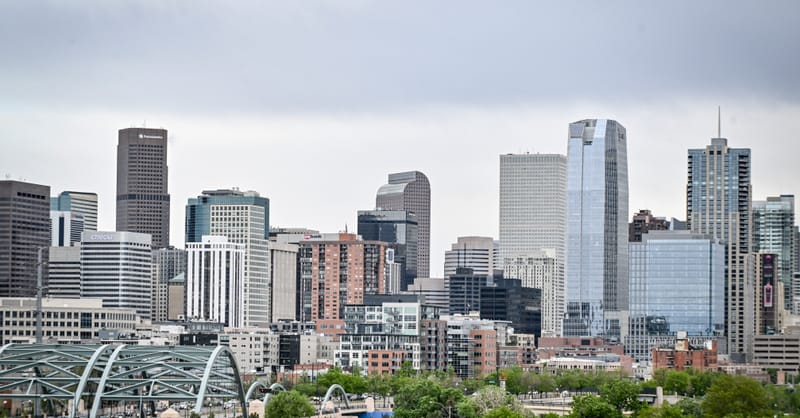
Denver's largest source of climate pollution is its buildings. Powering, heating, and cooling the city's skyscrapers takes a lot of fossil fuels.
Why it matters: Stop thinking in kilowatts and start thinking in calories; if you can't integrate PV with local thermal grids, you're leaving 50% of the building's energy budget to utility companies.
The Thermal Battery Under Your Feet
While European installers are busy fighting over the last few residential BESS margins, the real battle for urban decarbonization is moving underground. Denver’s shift to wastewater heat recovery (WWHR) isn't just a quirky municipal project; it’s a signal that the 'electrification of everything' is hitting a physical limit—the grid capacity. In major hubs like Berlin, Milan, or Warsaw, the grid is already gasping. If we try to solve the heating crisis with air-source heat pumps alone, the peak demand will crush local transformers.
The Margin Shift: From PV to Integration
Think about the physics. A typical sewer line maintains 10°C to 20°C year-round. For a project developer in the Netherlands or Germany, tapping into this via a centralized heat pump system can achieve a Coefficient of Performance (COP) of 4.0 or higher, even in the dead of winter. This is a far more efficient sink for your PV generation than a standalone air-source unit. Companies like Huber SE are already proving this tech works in Europe, and the German GEG (Building Energy Act) 65% renewable heat mandate is making these 'dirty' solutions incredibly lucrative.
If you are a C&I developer, your pitch shouldn't just be 'buy my panels.' It should be: 'Let me manage your thermal load by bridging your PV production with the local wastewater grid.' The risk for our industry is disintermediation. If municipalities solve the heating problem through sewer-based district heating without our involvement, the 'burning' need for individual rooftop PV-to-heat-pump solutions evaporates. You need to be the person designing the micro-grid that powers those massive central heat pumps. Stop being a panel-fitter and start being a thermal-electrical architect.