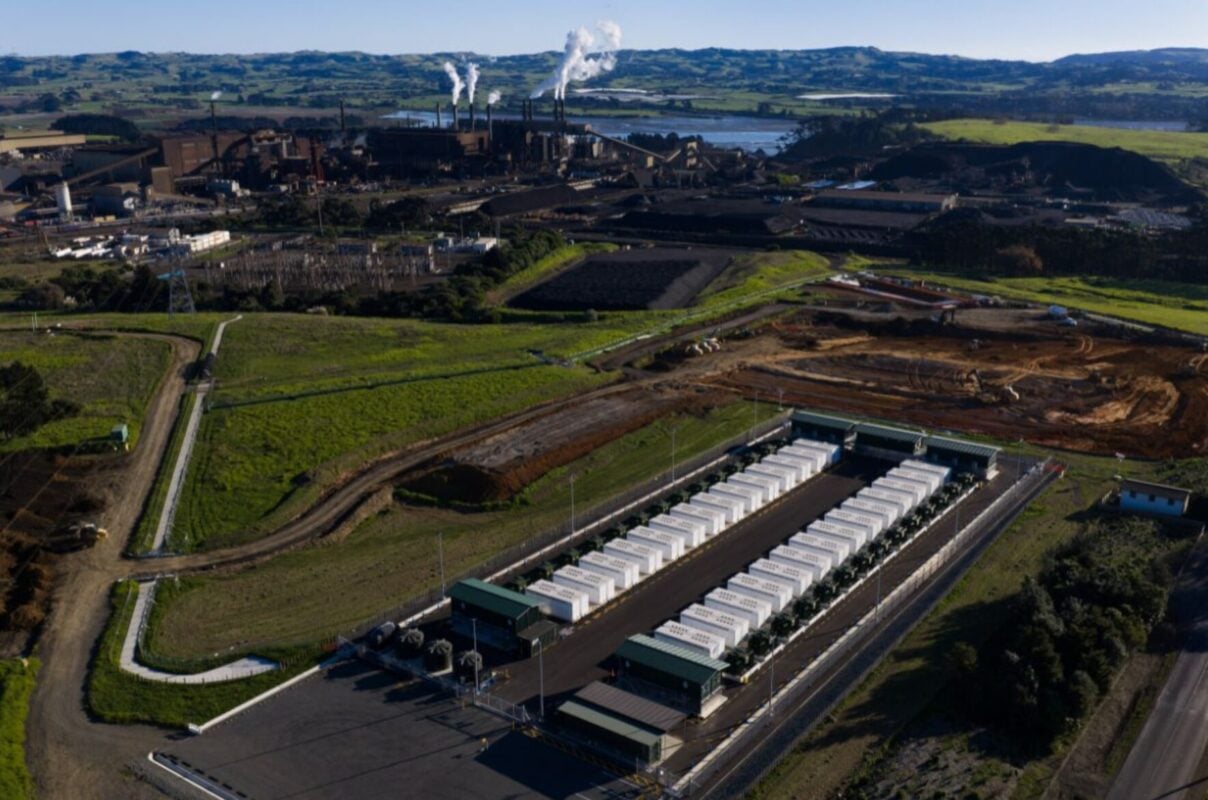
Contact Energy has brought online its first grid-scale BESS, a 100MW/200MWh installation at New Zealand Steel's Glenbrook site.
Why it matters: Heavy industry co-location is the only way to bypass Europe's grid queues and secure high-margin, large-scale storage contracts.
Don’t let the geography fool you. New Zealand’s grid is an island—literally and electrically—and it functions as a high-stakes laboratory for what European markets like Iberia, Ireland, and the UK are currently facing. Contact Energy’s 100MW/200MWh Glenbrook project isn’t just another utility asset; it is a front-row seat to the industrial co-location play that will define the next five years of European C&I solar and storage.
The Arbitrage of Heavy Industry
While most European installers are still arguing over 5kWh home batteries, the real money is migrating to where the load is heaviest. By dropping a 2-hour duration battery directly at a steel mill, Contact Energy is bypassing the traditional grid-bottleneck headaches that plague project developers in the Netherlands or Germany. They are tackling peak shaving and frequency response exactly where the volatility is generated. For a steel mill using Electric Arc Furnaces (EAF), the ability to buffer a 100MW swing is the difference between a profitable quarter and a margin call.
Stop Chasing Greenfields
In Europe, the Permitting and Grid Connection (PGC) process is the graveyard of solar dreams. The Glenbrook model suggests a pivot: Brownfield optimization. Instead of waiting three years for a new substation in Brandenburg, look for industrial sites with existing 'behind-the-meter' capacity. A 200MWh BESS paired with a 50MWp solar array at a manufacturing hub doesn't just provide green electrons; it provides price certainty in an era where the EPEX SPOT day-ahead market looks like a heart monitor. If you want to survive the current margin compression, stop selling 'sustainability' and start selling 'volatility insurance.'