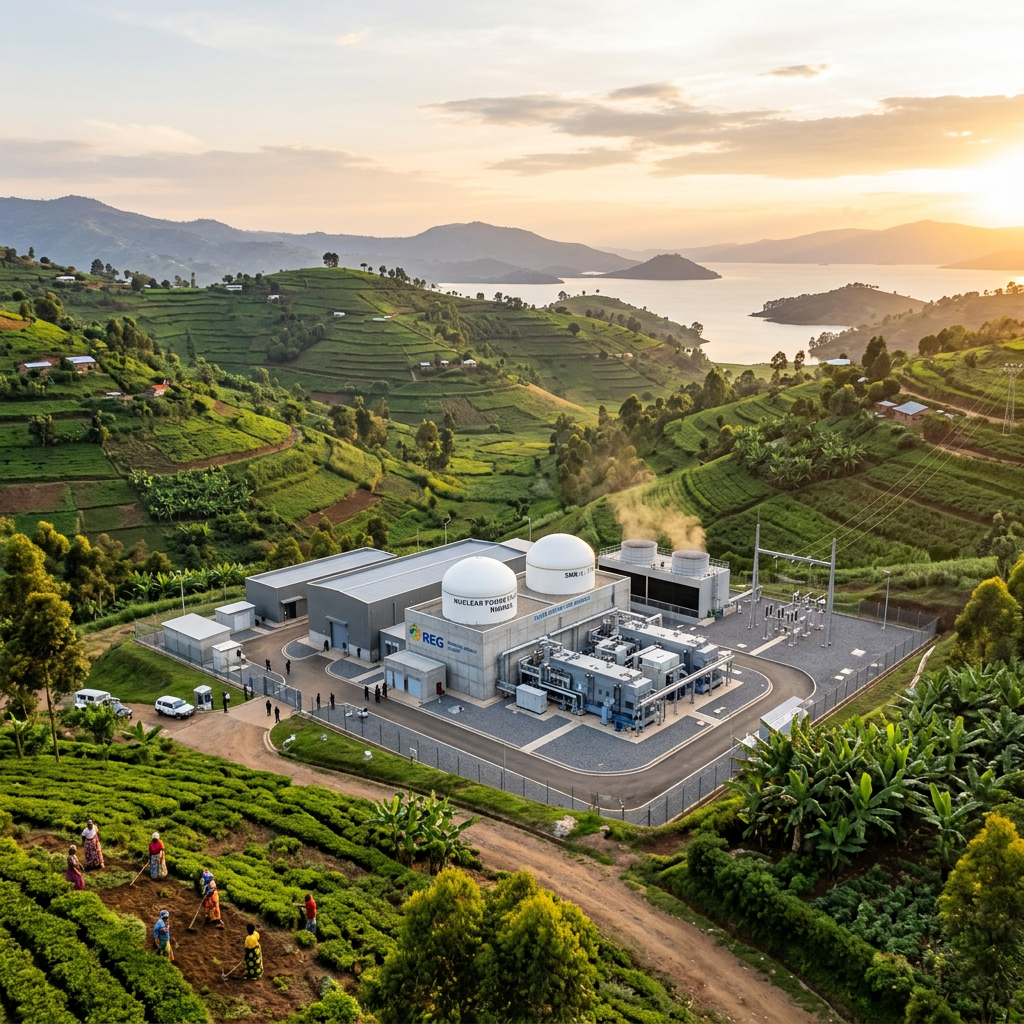
Rwanda plans to integrate nuclear energy into its power supply by the early 2030s, aiming for over 60% contribution by 2050. Recent IAEA reports validate its progress towards a safe nuclear program.
Why it matters: Nuclear talk is often a symptom of grid-stability anxiety; use it to sell your clients on the immediate reliability and lower CapEx of modern BESS integration.
I’ve spent enough time at Intersolar to know a "future-tech" distraction when I see one. Rwanda’s pivot toward Small Modular Reactors (SMRs) is being framed as a masterstroke for energy security, but for those of us in the trenches, it looks like a hedge against a grid that hasn't yet figured out how to integrate massive solar capacity. They are talking about 2030 for the first reactor. In the solar world, 2030 is three technology cycles away. By the time a single Dual Fluid Energy reactor—the German-Canadian tech Rwanda signed a deal for—actually splits an atom in Kigali, the LCOE of n-type TOPCon modules will have likely bottomed out beyond nuclear's wildest dreams.
The Bankability Reality Check
Here is the reality for project developers: Nuclear, even the "modular" kind, is a capital-intensive nightmare. While the IAEA gives Rwanda a pat on the back for regulatory progress, they aren't the ones signing the checks. SMRs are still largely unproven at commercial scale. Contrast this with the 8.5 MW Gigawatt Global field in Rwanda, which was commissioned in less than a year. If you're an EPC or a developer looking at the East African market, do not let the nuclear hype stall your pipeline. SMRs require sovereign credit guarantees that are notoriously difficult to secure; solar, conversely, is increasingly funded by private PPA structures and DFI money that wants results this quarter, not in 2031.
The Dispatchability Argument
This news is a massive signal that the "baseload" ghost still haunts emerging markets. Rwanda’s total peak demand is roughly 250MW. A single SMR could theoretically provide a huge chunk of that, but at what cost to grid flexibility? For European installers looking south, the play isn't to compete with nuclear—it's to preempt it. With LFP battery pack prices hitting sub-$100/kWh in some wholesale markets, a solar+BESS hybrid is already more modular, more scalable, and more reliable than a reactor that exists only on a CAD drawing. If a client asks about the nuclear trend, tell them: You can have a solar plant running by Christmas, or you can wait a decade for a permit.