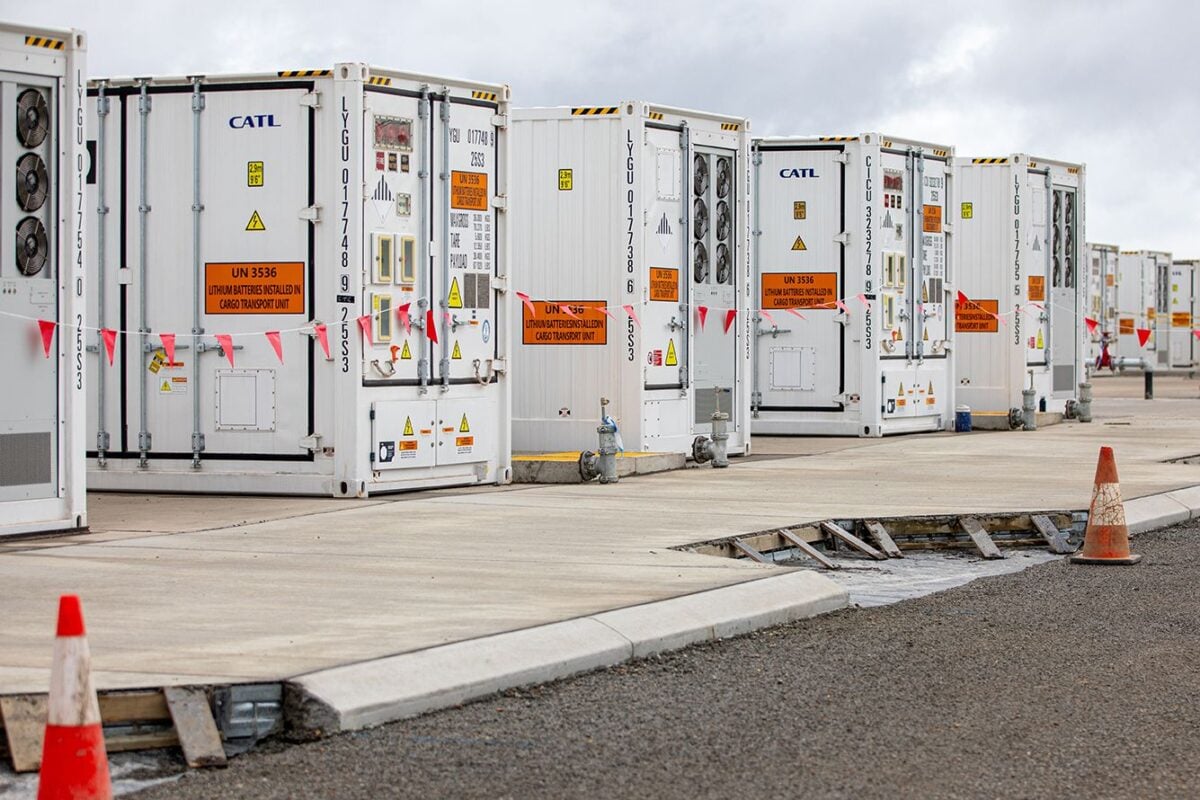
Australia has emerged as the world's third-largest utility-scale battery energy storage market, with 4.3GW of large-scale battery storage systems reaching financial close in 2025.
Why it matters: The Australian BESS gold rush proves that solar without storage is a stranded asset; start pitching hybrid systems today or watch your margins evaporate.
The 'Duck Curve' is Becoming a Canyon
If you’re a developer in Spain or the Netherlands watching negative pricing events multiply, look at Australia. They aren't just building batteries for fun; they're building them because the grid literally cannot function without them. Reaching 4.3GW of financial close in a single year isn't just a milestone—it's a desperate, profitable pivot to save the solar asset class from self-cannibalization. Australia is the global laboratory for what happens when PV penetration hits the 'physics limit' of an isolated grid.
For European professionals, the signal is clear: the era of 'dumb' PV is dead. In markets like Germany, where the EEG 2023 reforms are pushing larger systems toward direct marketing, the Australian model of value stacking is your future survival guide. You cannot rely on a single revenue stream. The Aussies are masters at blending arbitrage with Frequency Control Ancillary Services (FCAS). If your current C&I or utility-scale proposals in Europe don't include a sophisticated BESS strategy that accounts for grid stability payments, you’re leaving 30-40% of the potential IRR on the table.
The Global Hardware Squeeze
Expect procurement friction. With 4.3GW of demand coming from a single high-growth market, the lead times for Tesla Megapacks and Fluence Ultrastacks will tighten for European projects. We are competing for the same LFP cells. If you haven't locked in your 2025/2026 supply chain for large-scale storage, you're already behind the curve. Australia’s Capacity Investment Scheme (CIS) is effectively sucking the oxygen—and the lithium—out of the room.