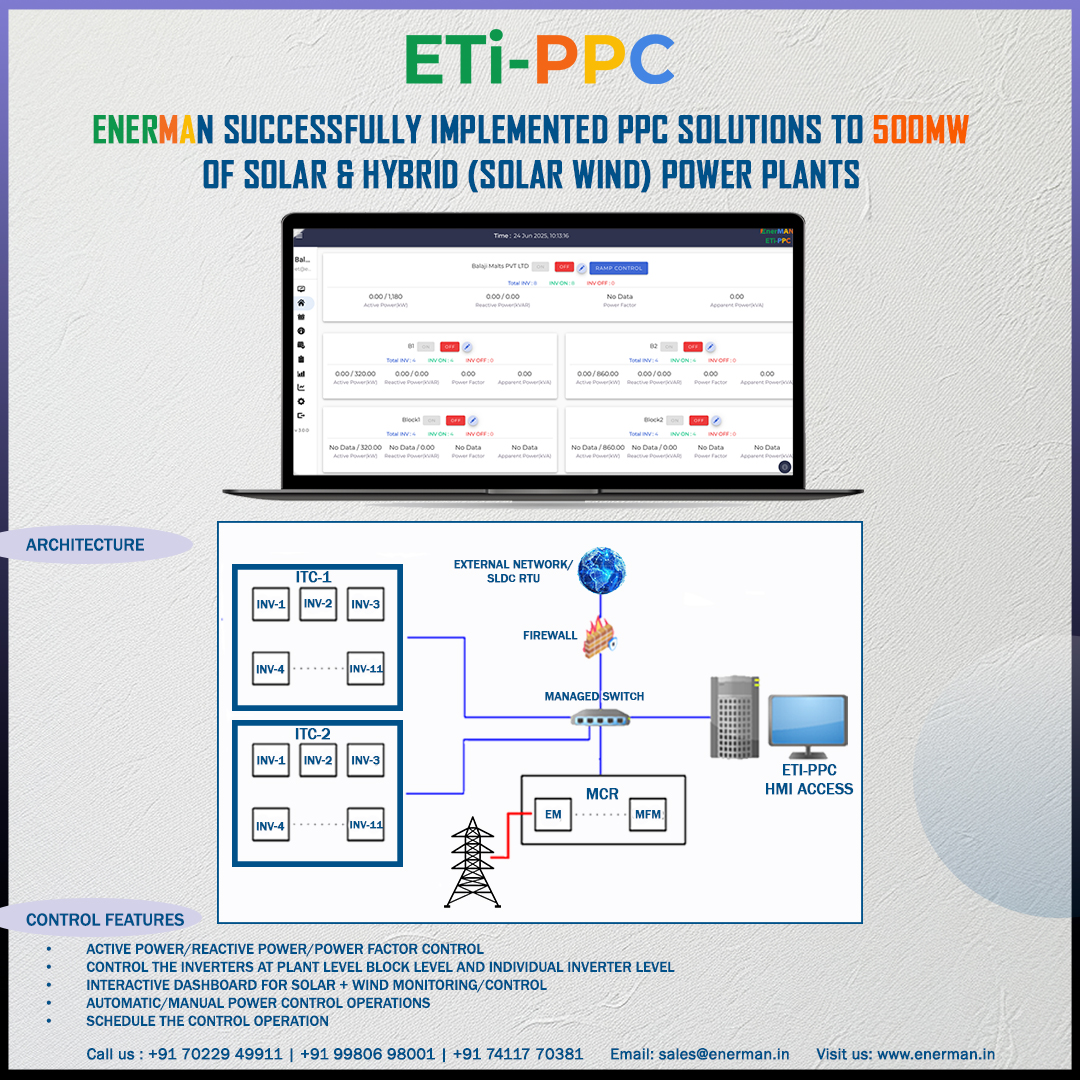
EnerMAN’s ETi-PPC system enhances plant operations through automated control, ensuring stable voltage and load distribution while adhering to regulatory standards.
Why it matters: As hybrid plants become the EU standard, a substandard controller isn't just a technical glitch—it's a fast track to grid disconnection and massive PPA penalties.
Gone are the days when a Power Plant Controller (PPC) was just a glorified Modbus bridge. In the current European landscape, if your PPC doesn't talk to the TSO in milliseconds, you're not a power plant; you're a liability. EnerMAN’s push into hybrid control highlights a shift we’re seeing from the Rhine to the Tagus: the grid connection is now the most expensive and volatile component of your project.
The Certification Trap
In Germany, the VDE-AR-N 4110/4120 standards have turned commissioning into a regulatory marathon. If you’re building a hybrid site—pairing, for example, 20MW of PV with a 10MW BESS—the controller must manage complex reactive power (Q) requirements and frequency response without tripping the main breaker. I’ve seen projects delayed by six months because a generic controller couldn't handle the sub-second handoffs between the PV inverters and the battery strings during a voltage dip.
Why Hybrid Architecture Changes the Math
The "soft" side of solar—the control logic—is where the margins are won or lost. If your O&M team is still manually adjusting setpoints because your controller is too "dumb" to handle automated frequency restoration reserves (aFRR), you're leaving significant revenue on the table in markets where ancillary services pay a premium.