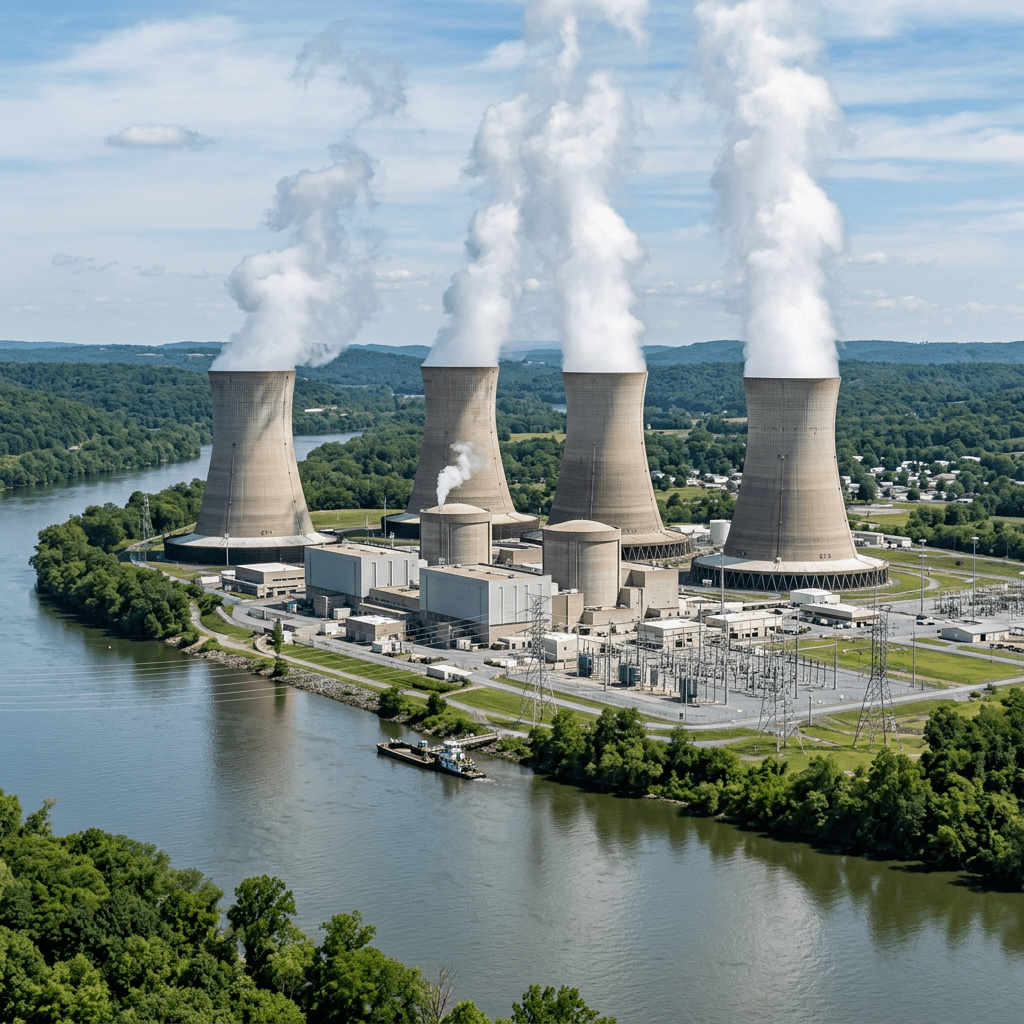
The collaboration includes forming a Joint Venture for a 700 MW reactor and exploring advanced technologies, supporting India's energy security efforts.
Why it matters: This pivot proves that even in prime solar markets, the state will favor expensive nuclear over solar if the grid's stability is at risk.
The Intermittency Wall is Real
If you’ve been following NLC India, you know them as the lignite-mining giant that’s been aggressively pivoting toward a 6GW renewable target. But this JV with NPCIL is a cold shower for the 'solar-will-power-everything' crowd. Even in a country with India’s solar irradiance, the state is hedging its bets with 700MW of heavy metal baseload. For European developers, the signal is clear: energy security is trumping pure LCOE.
Why This Isn't Just 'India News'
We are seeing the same friction in the EU. While the German Energiewende doubles down on wind and solar, countries like Poland and the Czech Republic are watching India’s playbook closely. They aren't just looking at the €25/MWh price tag of Indian solar; they are looking at the massive cost of grid stabilization. The reality is that once solar penetration hits a certain threshold, the 'duck curve' becomes a canyon. NLC isn't building nuclear because it’s cheaper than PV—it’s not—it's building it because dispatchability is the new gold.
The BESS vs. Nuclear Calculation
Don't be fooled by the 'clean energy' labels. This is about industrial survival. A 700MW reactor provides the kind of voltage stability that a 1GW PV plant—even with a massive SMA or Sungrow inverter fleet—struggles to match without synchronous condensers.