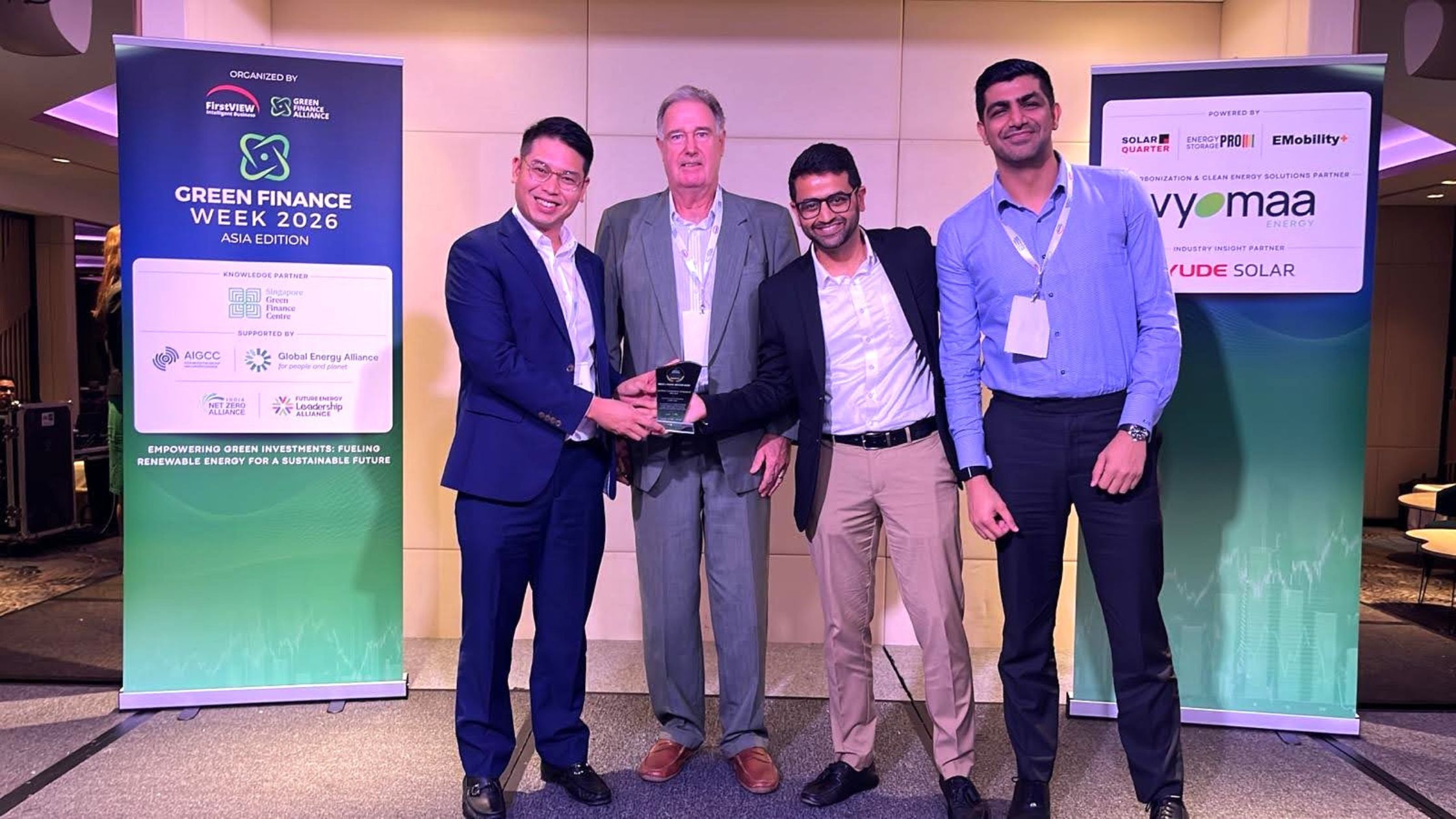
Lockton Companies Singapore Pte Ltd received the “Green Insurance Product of the Year” award at Green Finance Week: Asia 2026 for its innovative master insurance product for multi-country solar portfolios.
Why it matters: Standardized insurance is the secret to lower interest rates and faster exits for multi-country PV portfolios.
On the surface, a regional insurance award in Singapore feels like a local news snippet you’d ignore while waiting for your flight at Changi. But look closer at the mechanism: master insurance products for multi-country portfolios. For European developers currently trying to stitch together fragmented assets across Poland, Romania, and Greece, this is the exact financial engineering needed to move from project-by-project headaches to institutional-grade scaling.
The End of the Patchwork Policy
We’ve all been there. You’ve got a 50MW portfolio, but it’s spread across four different jurisdictions. Traditionally, that meant four different local insurers, four different sets of policy wording, and a nightmare for your CFO when trying to secure non-recourse debt. By the time you’ve reconciled the technical requirements of a Munich Re or Swiss Re backstop with local compliance, your soft costs have eaten 2% of your IRR. Lockton’s move toward a unified master product is a signal that brokers are finally catching up to the reality of distributed, cross-border generation.
The Money Angle: Bankability and LCOE
Why does a broker win an award for this? Because it solves a bankability gap. When you can present a single, comprehensive risk umbrella to a lender like BNP Paribas or Santander, the risk premium on your debt drops. I’ve seen portfolios where a unified insurance structure shaved 15-20 basis points off the interest rate simply by eliminating the 'uncertainty gap' between local policies. In an era where 10-year PPA prices are tightening across the EU, that margin is the difference between a project that pencils out and one that gathers dust.