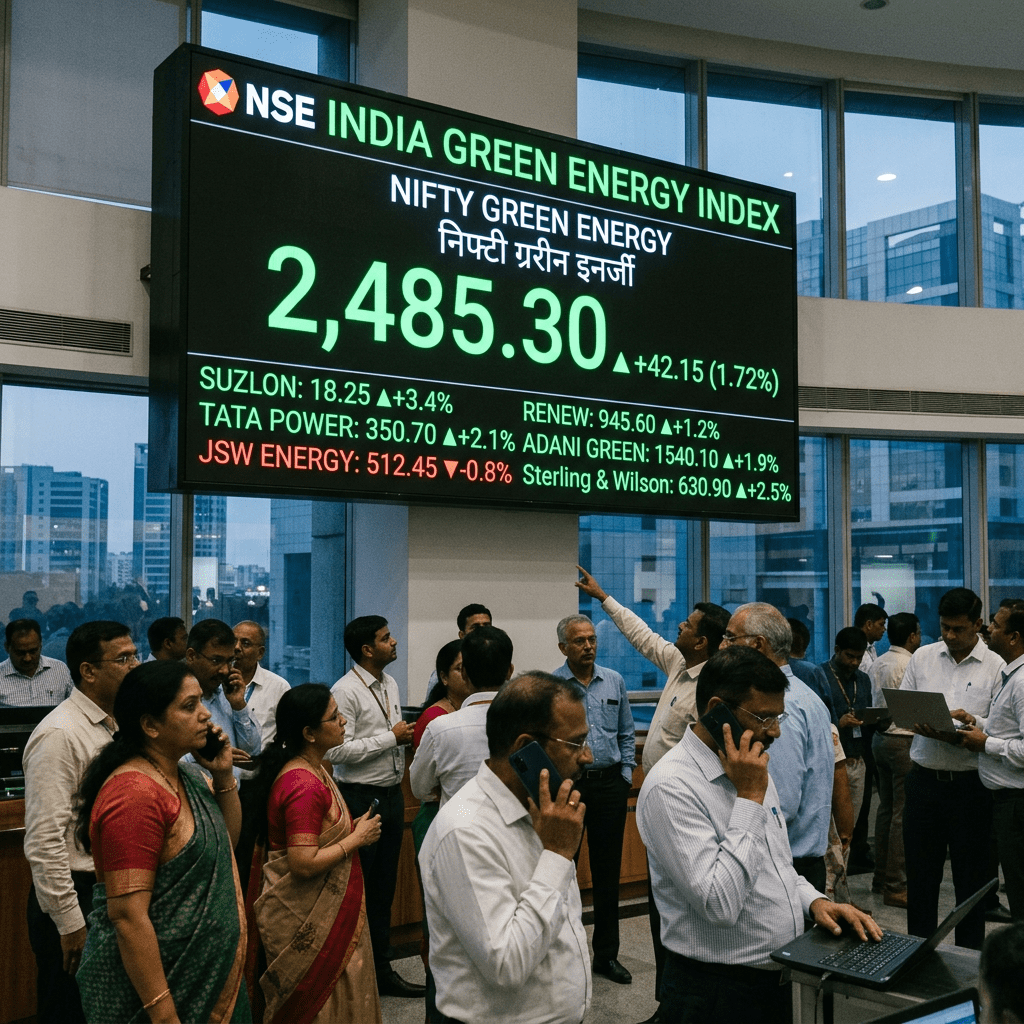
The session highlighted a divergence in the sector, with larger firms thriving and smaller players facing declines amid cautious sentiment.
Why it matters: When global capital abandons 'green' for 'green giants,' your local supplier choice becomes a survival strategy.
The Great Green Decoupling
While the S&P BSE SENSEX took a 0.63% haircut, heavyweights like Exide Industries and JSW Energy stayed green. This isn't just a random blip on a trading screen in Mumbai; it’s a flashing signal for every European EPC and distributor who thinks the 'green tide lifts all boats.' It doesn't. We are entering the era of the 'Green Heavyweight,' where capital flees risky, small-cap installers and component makers to hide in the balance sheets of the giants.
Why the 'Small Player' Decline Matters in Madrid and Munich
The 'cautious sentiment' mentioned in the report is a polite way of saying investors are terrified of margin compression. In the EU, we’ve seen this movie before. When the market gets volatile, the tier-3 inverter brands and the 'two-guys-and-a-van' installers are the first to get squeezed. If Exide—a company pivoting hard into the Li-ion space to challenge CATL—is rallying, it’s because the market sees battery storage as the only non-negotiable insurance policy against energy price volatility.
If you're still relying on a portfolio of 'innovative' (read: unproven) startups for your BESS or PV hardware, you’re betting against the house. The market is telling you that the future belongs to the massive. Whether it's Tata Power in India or BayWa r.e. in Europe, the flight to quality is actually a flight to scale. If your supplier isn't a heavyweight, they might not be around to honor that 25-year warranty when the next correction hits.