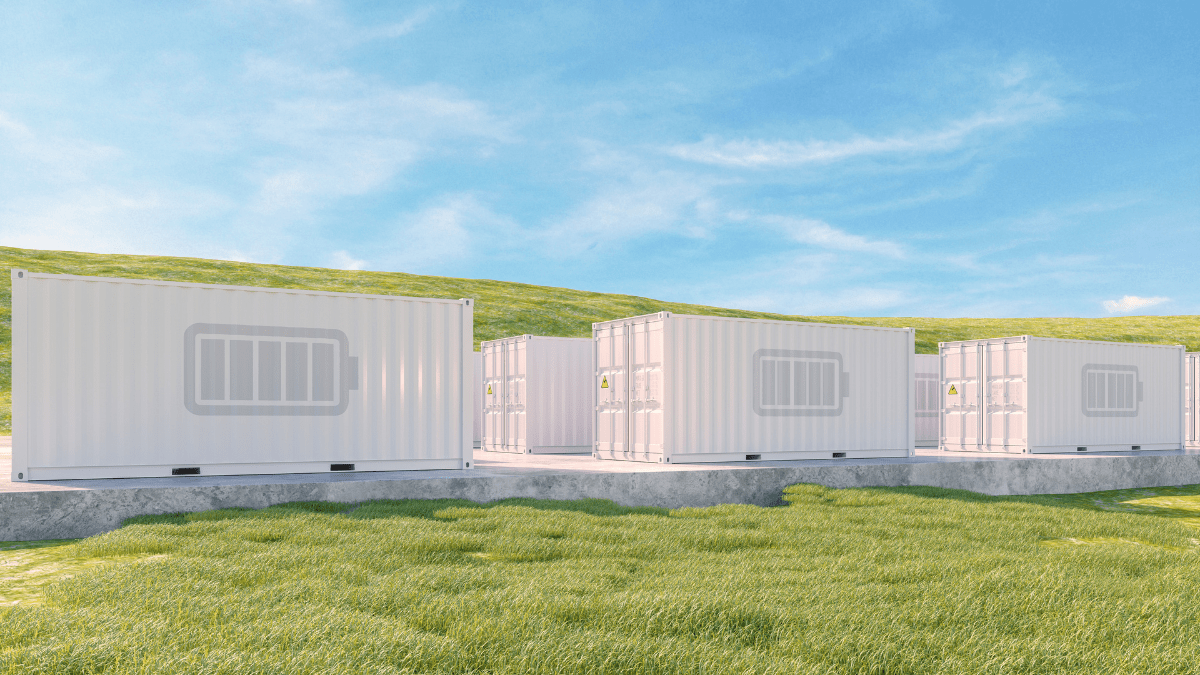
The three Texas projects, expected to commence in mid-2026, will utilize Eos Energy’s battery systems. FPUSA aims to enhance investor confidence through a Technology Performance Insurance framework, facilitating efficient construction.
Why it matters: Insurance-backed non-lithium storage is finally becoming bankable at scale, offering a blueprint to bypass the LFP supply chain monopoly.
Everyone in the European BESS space is currently obsessed with the race to the bottom on LFP (Lithium Iron Phosphate) pricing. But while we’re busy haggling over cents per kWh with CATL or BYD, Frontier Power USA is doing something far more interesting in the ERCOT market: they’re betting 480 MWh on Eos Energy’s zinc-aqueous technology. For those who haven’t spent their nights reading data sheets, Eos isn’t lithium. It’s a non-flammable, long-duration alternative that has spent years trying to prove it can play in the big leagues.
The "Insurance" Secret Sauce
The real story here isn't the acquisition; it's the Technology Performance Insurance. If you’re a developer in Germany or the UK trying to pitch a non-lithium solution to a bank, you know the immediate wall you hit: bankability. Investors hate "new," and they loathe "unproven." By wrapping this 480 MWh portfolio in a performance insurance framework, FPUSA has effectively neutralized the primary argument against alternative chemistries. They’ve turned a technical risk into a manageable line item on a balance sheet.
Why European Developers Should Care
We are seeing a massive shift in grid requirements across the EU, specifically with the Netzbooster projects in Germany and the increasing demand for 4-hour+ storage in the UK’s Capacity Market. Lithium is great for frequency response, but its cost-curve flattens out uncomfortably for long-duration applications. If this Texas experiment proves that insurance markets can reliably backstop non-lithium tech at a scale of nearly half a gigawatt-hour, the monopoly of the Chinese LFP giants is officially under threat.
Ultimately, ERCOT is the world’s most brutal laboratory for energy storage. If Eos’s zinc tech survives the price volatility and thermal stress of Texas with this insurance model intact, expect to see these same wrappers appearing in project finance folders from Madrid to Warsaw by 2027.