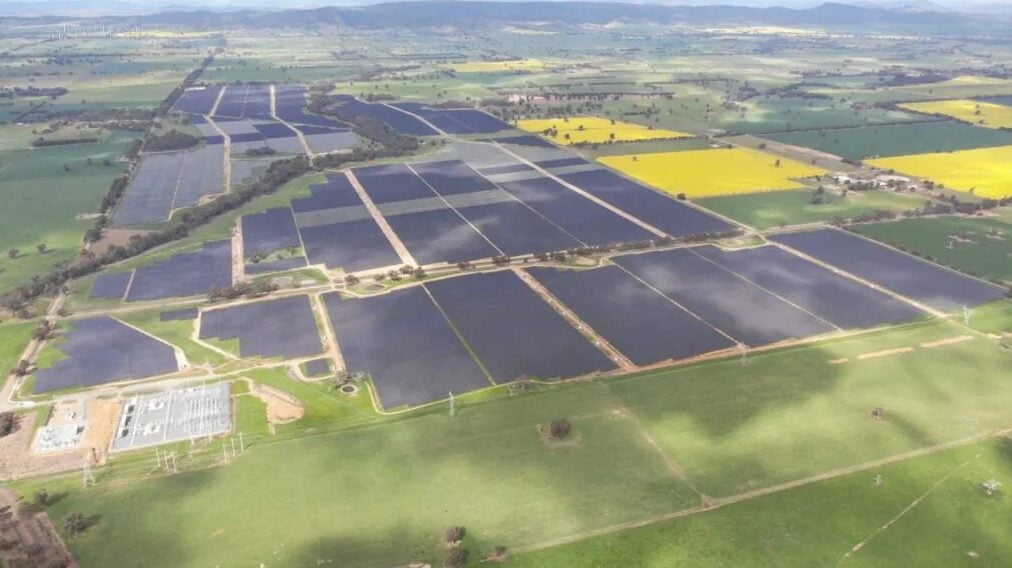
A new report from Greenpeace Australia has warned that the rapid expansion of AI data centres across Australia is set to slow the country's renewable energy transition rather than accelerate it.
Why it matters: Data centers are outgrowing the grid; if you can't build them a self-sufficient solar-plus-storage microgrid, you're leaving the decade's biggest margins on the table.
Greenpeace is looking at the grid through a rearview mirror. While they see data centers as a 'threat' to decarbonization because of their sheer baseload demand, I see the most lucrative client base European solar developers have ever encountered. If you’re a developer in the FLAP markets (Frankfurt, London, Amsterdam, Paris), this Australian warning is actually your 2025-2030 business plan.
The Death of 'Green Certificates'
For years, data center giants satisfied their ESG goals by buying cheap Guarantees of Origin (GOs) while sucking coal-heavy power from the grid at 3 AM. That era is dead. The sheer scale of AI processing—driven by Nvidia H100 clusters that pull triple the power of traditional servers—means these facilities are now facing local grid moratoriums. In places like Dublin or South Frankfurt, the grid simply says 'no.' This creates a massive opening for behind-the-meter (BTM) microgrids.
The 24/7 CFE Opportunity
Instead of fearing the load, smart installers should be pivoting to 24/7 Carbon-Free Energy (CFE) solutions. Microsoft and Google are already moving toward hourly matching. For a solar pro, this isn't just about slapping panels on a warehouse roof; it’s about integrated Long-Duration Energy Storage (LDES) and sophisticated Energy Management Systems (EMS). We aren't just selling modules anymore; we’re selling grid independence to companies with bottomless pockets and a desperate need for uptime.
The Strategy:
Australia’s 'warning' is a signal that the centralized grid is failing under the weight of the digital age. In Europe, the winners will be the installers who stop waiting for the utility to upgrade the transformer and start building the power plant directly next to the server rack.