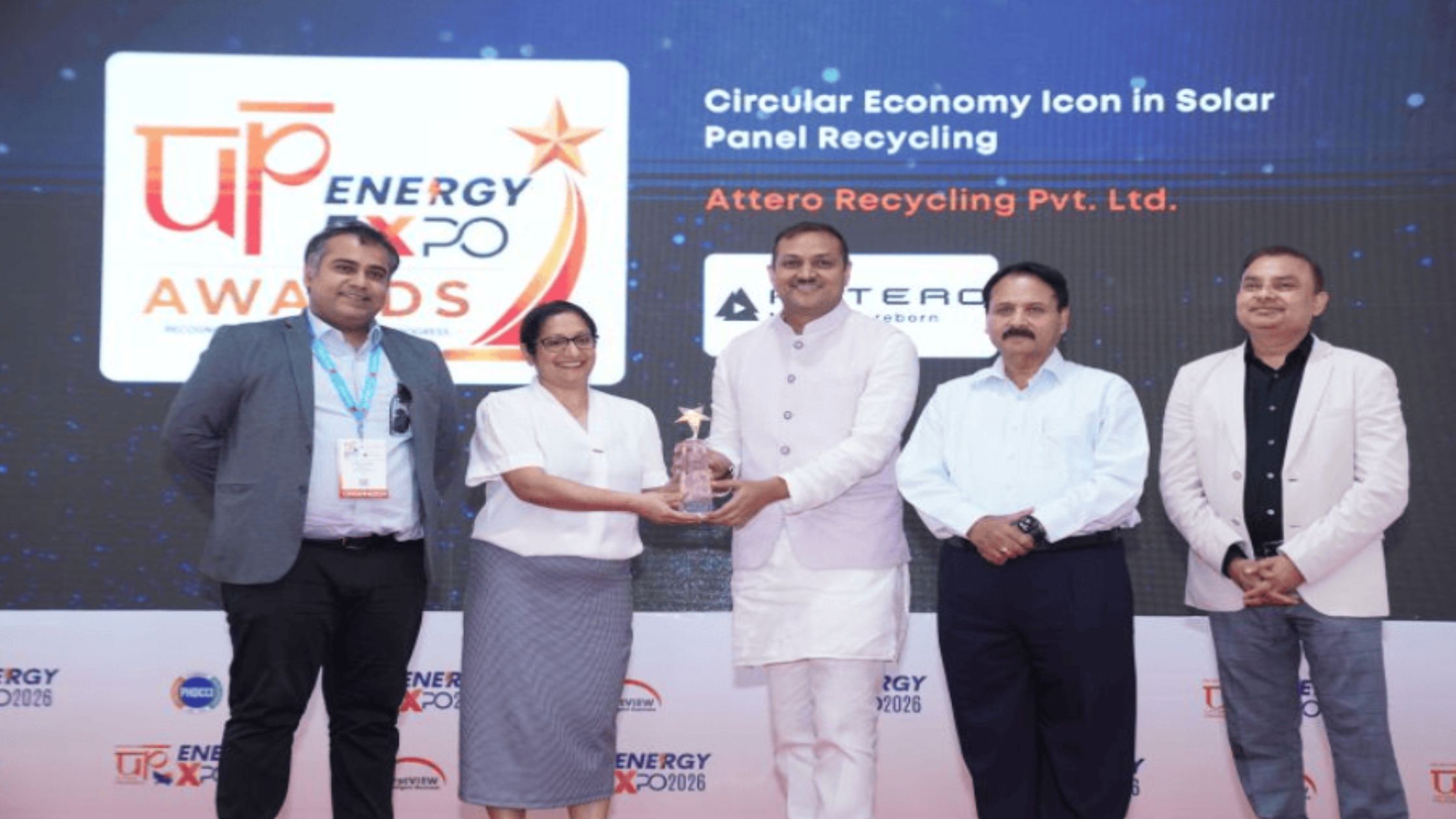
Attero Recycling Pvt. Ltd. received the Circular Economy Icon in Solar Panel Recycling Award, recognizing its commitment to sustainable recycling and circular economy practices in the renewable energy sector.
Why it matters: PV recycling is shifting from a 'green' checkbox to a high-stakes material recovery business that will dictate your long-term decommissioning costs.
While we in Europe pat ourselves on the back for the WEEE Directive, this award for Attero in Uttar Pradesh is a signal that the global south is waking up to a reality many EU installers are still ignoring: the massive decommissioning liability sitting on roofs right now. We like to think of PV as clean, but the first wave of 2000s-era installations—those 200W-250W poly modules—are hitting their end-of-life, and the recycling infrastructure in many EU member states is still more about 'compliance' than 'recovery.'
The Profit in the Trash
India is scaling recycling because the economics of raw material scarcity demand it. Attero isn't just doing this for the environment; they are hunting for silver, high-purity silicon, and copper. In Europe, firms like ROSI Solar in France or FLAXRES in Germany are doing the heavy lifting, but the average installer in Italy or Spain still views a dead module as a disposal cost rather than a secondary raw material asset. If you aren't accounting for the escalating costs of the Producer Responsibility schemes in your long-term O&M contracts, you're leaving a landmine for your future self.
A Market Signal for Developers
The real takeaway? India is treating solar recycling as a standalone, profitable industrial sector. In Europe, we still treat it as a waste management chore. For a project developer, the difference between a project that costs €0.10/W to decommission versus one that pays for itself through material recovery is the difference between a healthy exit and a balance sheet disaster.