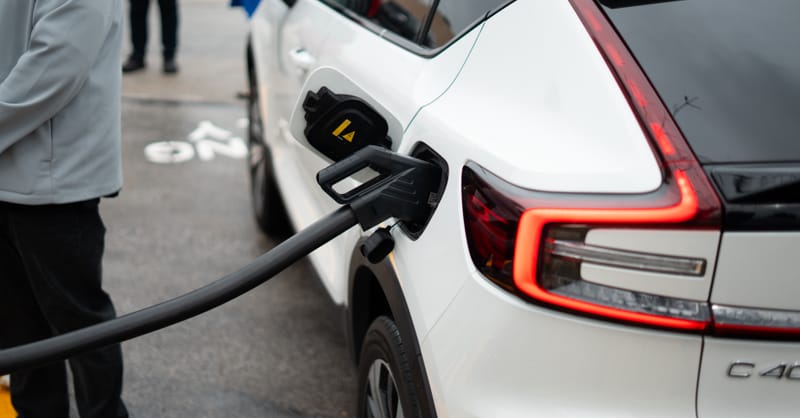
But in Illinois, it’s slowly becoming more than just a place for folks to pick up ceiling hooks and gardening gloves, as developers…
Why it matters: Retailers are pivoting from energy consumers to energy hubs; if you aren't offering a PV+BESS+EV package, you're leaving the highest-margin C&I work to the utilities.
While Menards might be a Midwest American phenomenon, the underlying trend is a carbon copy of what we're seeing across the EU. Retailers have finally realized that a parking lot is no longer just a liability to be paved and plowed—it’s an asset class. For the European installer, the Menards move into EV ports is a signal that the 'Destination Charging' land grab is accelerating, and if you aren't the one pitching the integrated PV-EV-BESS stack, you’re losing the most lucrative part of the C&I market.
The 'Dwell Time' Economics
Retailers like Aldi Süd in Germany or Tesco in the UK aren't installing 50kW or 150kW DC chargers out of the goodness of their hearts. They’re doing it because of dwell time. An EV driver plugged into a fast charger stays for 25–40 minutes—exactly the window needed for a high-margin grocery or DIY run. For an installer, this is the wedge you use to open a broader conversation. Don't just sell them a 200kWp rooftop system; sell them the infrastructure that monetizes the cars sitting beneath it.
The Grid Connection Bottleneck
The real 'war story' here is the grid. In markets like the Netherlands or parts of Poland, getting an additional 500kVA for a bank of fast chargers is a nightmare that can take 24 months. This is where the money is made. You don't just 'add ports' like Menards; you design a microgrid. By pairing the solar array with a Battery Energy Storage System (BESS), you can buffer that EV load and avoid the crippling grid reinforcement costs that kill project ROIs. If you aren't talking about peak shaving to your C&I clients right now, you're just a hardware peddler.