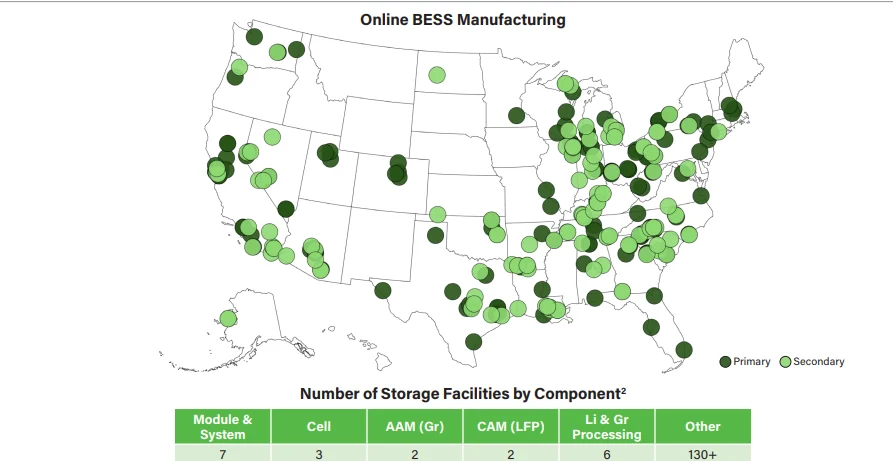
The US can currently produce enough solar and battery energy storage system (BESS) modules to meet domestic demand, according to clean energy trade body American Clean Power (ACP).
Why it matters: A closed US market means redirected global supply will flood Europe, keeping module prices low but increasing the risk of sudden EU trade protections.
The Redirected Tsunami
When the American Clean Power (ACP) takes a victory lap over domestic manufacturing, European installers should be reaching for their life jackets. This isn't just a feel-good story about 'Made in the USA'—it is a clear signal that the world's second-largest solar market is effectively closing its doors to the global supply glut. If the US can truly satisfy its own demand through IRA-subsidized factories, the massive overcapacity from Chinese Tier 1s like Jinko Solar and Trina has only one high-value destination left: the European Union.
The NZIA Paper Tiger
While the US uses the carrot and stick of the Inflation Reduction Act to build a fortress, Europe’s Net-Zero Industry Act (NZIA) feels increasingly like bringing a knife to a gunfight. We are already seeing module prices hovering near the €0.10-€0.12/W mark in Rotterdam warehouses. If US demand for Chinese-made or Southeast Asian-assembled cells evaporates, those prices will stay in the basement. For a project developer in Spain or Poland, this looks like a margin win. For anyone hoping for a resilient European supply chain, it’s a death knell. We’ve already seen Meyer Burger pivot toward the US for precisely this reason—the subsidies there actually cover the cost of doing business, whereas here, we just get 'targets.'
Don't be fooled by the 'domestic' tag. The US is decoupling, and Europe is about to become the world’s bargain bin for high-tech PV and storage components.