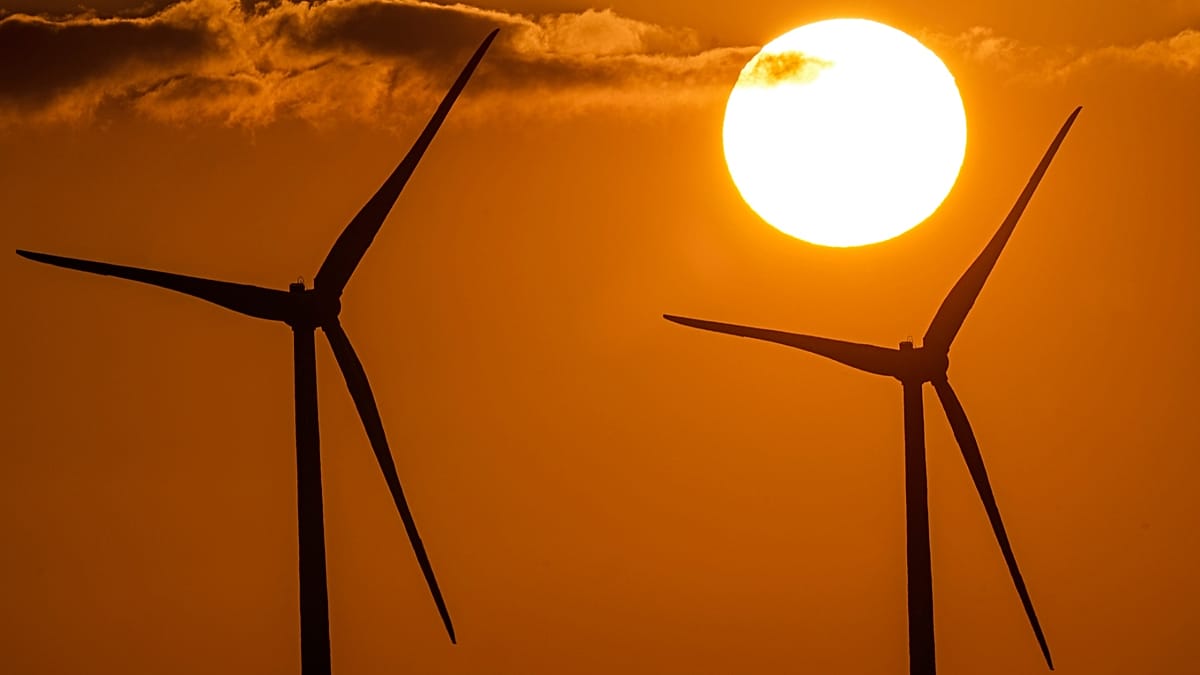
The United Nations is warning that the main culprit behind Europe's blistering temperatures is the world's "addiction" to burning fossil fuels.
Why it matters: Rising temperatures degrade PV performance; you must switch to low-coefficient modules and storage or your production guarantees will fail.
While the UN frames this as a moral imperative to kick the fossil fuel habit, let’s talk about what these heatwaves actually do to your balance sheet. For a developer in Andalusia or the Peloponnese, a "blistering" May isn't just a climate headline—it’s a technical assault on system performance. We are entering an era where the temperature coefficient of a module is more important than its nameplate peak power.
The Efficiency Haircut
Standard p-type PERC modules typically carry a temperature coefficient of Pmax around -0.35%/°C. When ambient temperatures hit 35°C, roof surfaces can easily exceed 65°C. Do the math: you're looking at a 14% drop in output exactly when your C&I clients are ramping up their HVAC systems to the max. If you sold that project on a 20-year IRR based on historical weather data, your margins are already melting.
The N-Type Necessity
If you aren't pivoting your sales pitch to N-type TOPCon or HJT (Heterojunction) tech, you’re doing it wrong. Brands like Aiko or REC with coefficients closer to -0.25%/°C or -0.24%/°C aren't just "premium" options anymore; they are the baseline for survival in a warming Europe. A 0.1% difference in coefficient sounds like engineering pedantry until you realize it represents a 3-4% yield delta over a scorching summer month.
The Storage Upsell
Finally, look at the grid volatility during these heatwaves. We’re seeing massive midday price cannibalization followed by evening spikes as the sun sets but the heat—and the AC demand—remains. In markets like the Netherlands or Germany, the business case for BESS (Battery Energy Storage Systems) is no longer about "green feelings." It’s about time-shifting that midday surplus to avoid the 18:00 price surge. If you’re still installing solar-only in 2024, you’re selling a half-finished bridge.