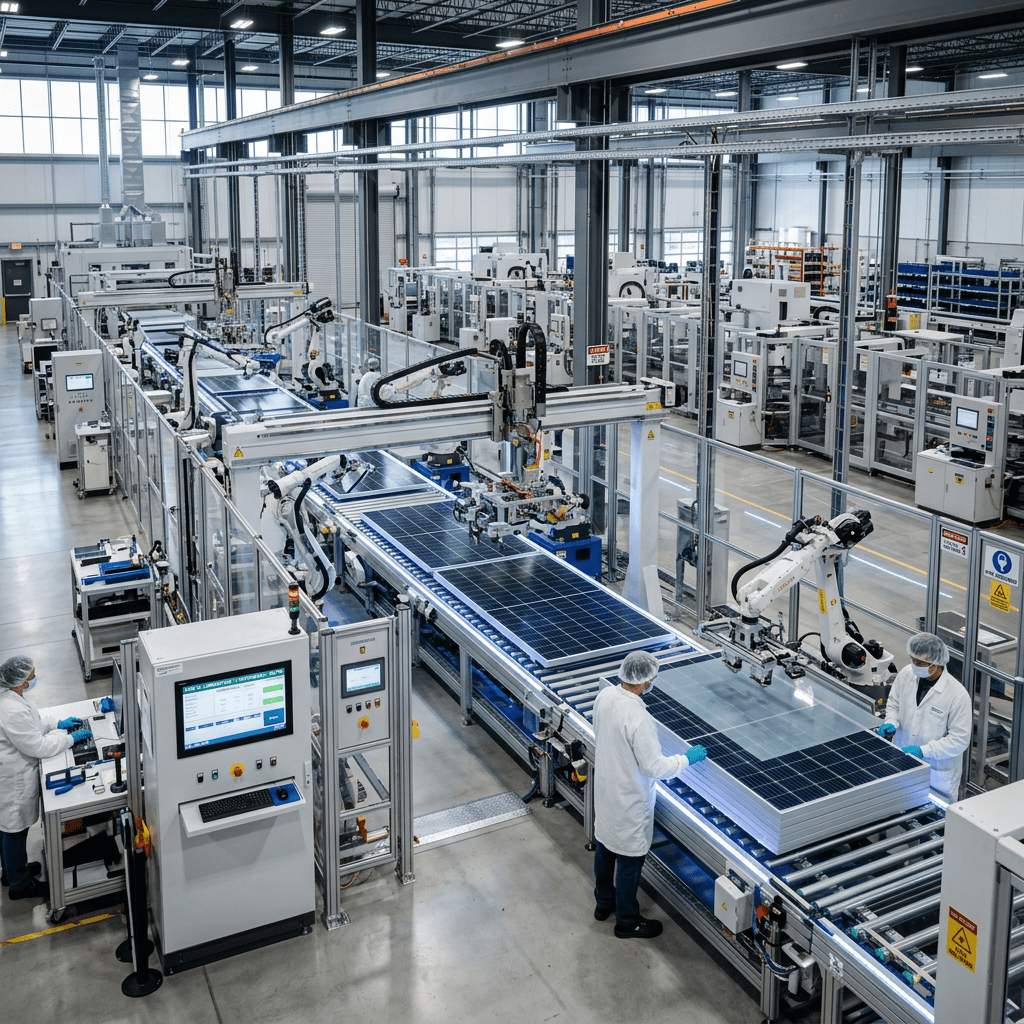
Reliance Industries Ltd. has launched its New Energy business by delivering the first 200 MWp batch of advanced solar modules from its Jamnagar facility, a crucial step in India's renewable energy strategy.
Why it matters: The 'Made in India' badge is about to move from a budget alternative to a high-performance threat to your premium supplier list.
The Death of the 'High-Tech' Moat
For years, European manufacturers and premium installers leaned on a comfortable narrative: China does volume, but we do Heterojunction (HJT). It was the high-efficiency sanctuary for those who didn't want to play the TOPCon commodity game. Reliance just burned that bridge. By shipping 720Wp HJT modules from Jamnagar, Mukesh Ambani isn't just entering the market; he's commoditizing the very tech that was supposed to save European manufacturing.
The REC DNA at Scale
Lest we forget, Reliance didn't invent this in a vacuum—they bought REC Group in 2021 to acquire the IP. What we are seeing now is the terrifying result of pairing Singaporean/European R&D with Indian industrial scale and a vertical integration strategy that makes most Tier-1s look like assemblers. For a developer in Spain or Germany, this is a signal that high-performance, low-degradation glass-glass modules are about to get much, much cheaper.
The Margin Squeeze is Coming for Installers
If you've been selling Meyer Burger or other high-end HJT brands on the 'premium' ticket, your pitch just got harder. When 200MWp batches start hitting the global market from a company with a balance sheet larger than some European countries, 'premium' becomes the new baseline. Expect levelized cost of energy (LCOE) calculations for southern European projects to shift as these modules drive down the price-per-watt for 22%+ efficiency gear. If your distributor isn't already talking to Reliance, you're looking at the wrong catalog.