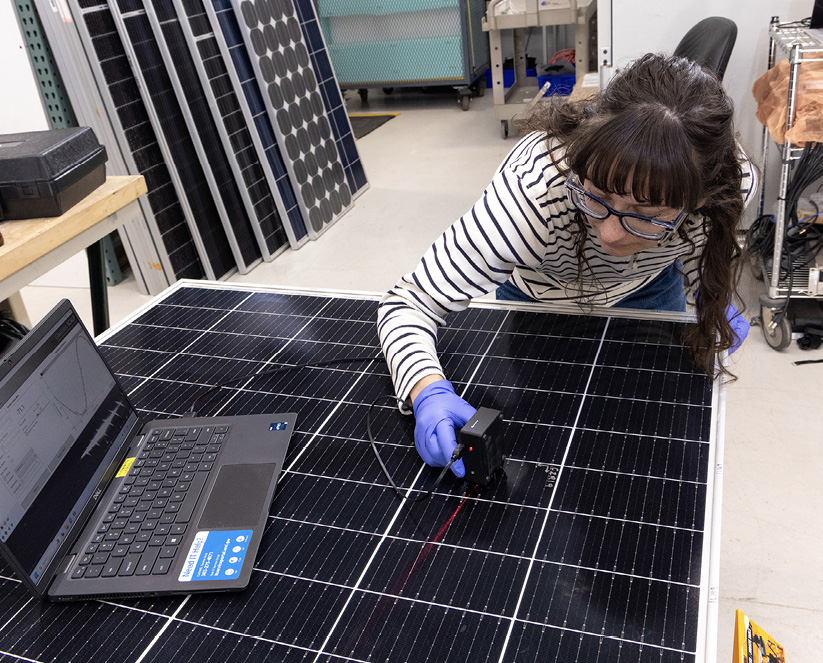
La rotura espontánea del vidrio es ahora uno de los principales problemas de la industria solar, pero las presiones de fabricación y la falta de estándares están dificultando la búsqueda de soluciones.
Why it matters: Warranty claims don't cover your labor or logistics costs—buying unproven, thin-glass modules is a ticking time bomb for your O&M margins.
We’ve all seen it: a site walk-through where a module looks like a spiderweb for no apparent reason. No hail, no stray rocks, just physics finally catching up with accounting. For years, the Tier 1 marketing machine sold us on the dream of 'thinner, lighter, bifacial,' but they conveniently forgot to mention that thinning glass down to 2.0mm—or even 1.6mm in some aggressive Bill of Materials (BOM)—leaves zero margin for manufacturing impurities.
The Microscopic Grenade in Your Array
The technical culprit is usually Nickel Sulfide (NiS) inclusions. When manufacturers rush the tempering and cooling phases to hit those insane quarterly shipment targets, these tiny crystals don't have time to stabilize. They sit dormant until a specific thermal cycle triggers an expansion, and pop—there goes your string's performance. While the industry standard IEC 61215 covers mechanical loads, it’s notoriously weak on long-term glass stability under the actual thermal stress seen in places like the Spanish Altiplano or Southern Italy.
The 'Free' Warranty Trap
If you're an EPC or an O&M provider, this isn't just a technical curiosity; it’s a margin killer. Let's look at the math. Even if a manufacturer like Jinko or JA Solar honors the warranty—which is a bureaucratic marathon in itself for a handful of modules—they are only sending you the glass. They aren't paying for the truck roll, the scissor lift, the specialized labor, or the disposal fees. At current European labor rates of €65-€90 per man-hour, a 'free' replacement module actually costs your business roughly €250-€400 in lost profit.