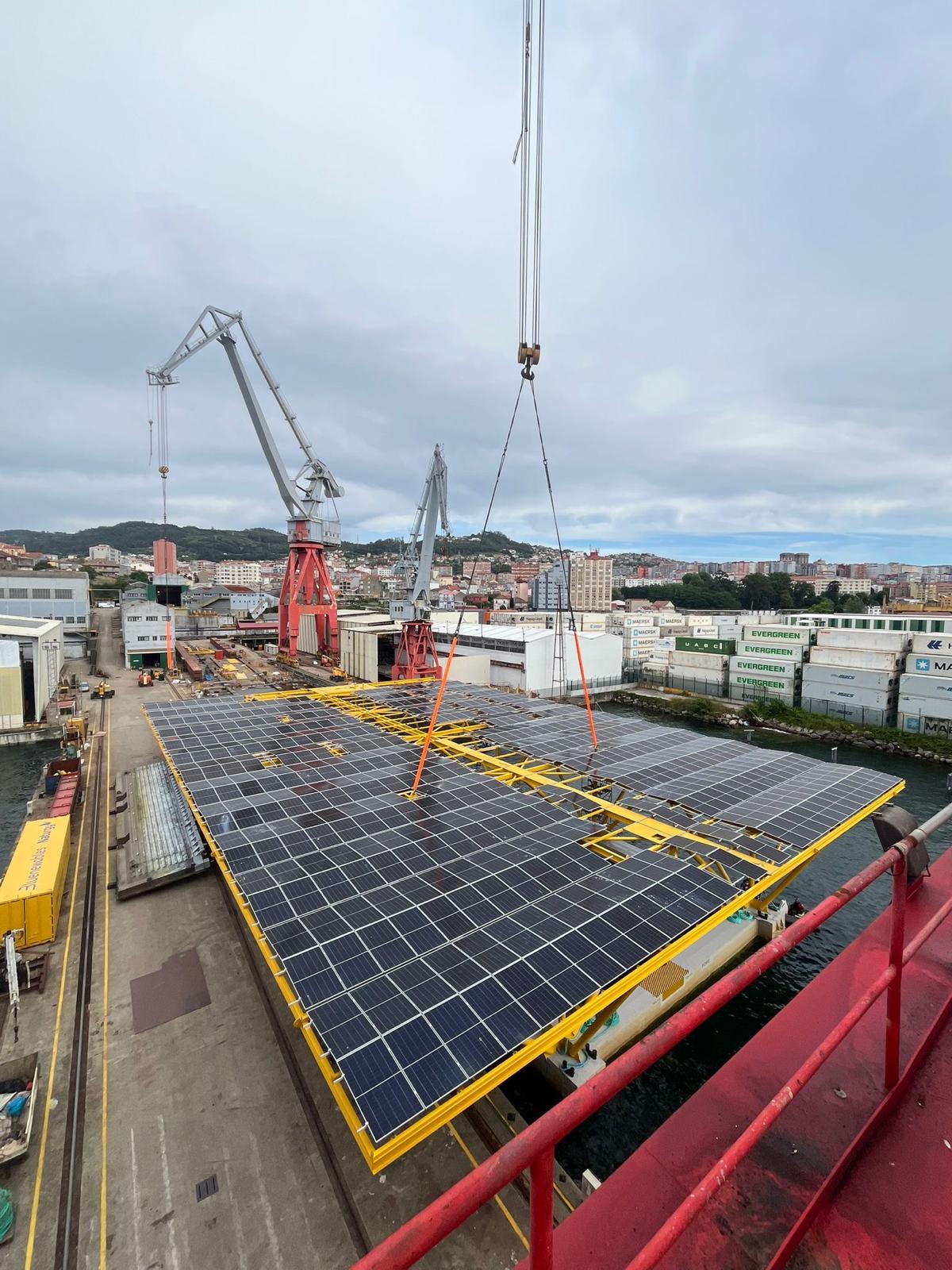
Se trata de una de las dos unidades PVbos de 500 kW cada una que contempla el proyecto. Esta primera plataforma forma parte de un sistema fotovoltaico offshore flotante de 1 MW de potencia total, concebido para operar en mar abierto mediante tecnología flotante de gran capacidad.
Why it matters: Offshore PV is the final frontier for land-constrained developers; Vigo is the laboratory where we see if the hardware can actually survive the world's harshest environments.
The Atlantic Is Not a Reservoir
Most developers treat floating PV (FPV) like a solved problem because they’ve seen a few hundred megawatts on calm Dutch reservoirs or Chinese quarry lakes. Vigo is different. Deploying 1MW of PVbos technology in the Atlantic isn't just about finding space; it’s a brutal engineering bet against the C5-M corrosion category. If you’ve ever seen what salt spray does to a standard anodized aluminum rail after twelve months, you know why this matters. This isn't a project for your standard residential installer; it's a signal to utility-scale players that land constraints in Europe are becoming so terminal that we’re willing to fight the ocean for 1,000 kilowatts.
The Co-Location Play
Why bother with the high O&M costs of offshore solar? Look at the North Sea. The real end-game here isn't standalone offshore PV—it’s the 'Power-to-X' and offshore wind co-location. By 2030, the EU’s Strategy on Offshore Renewable Energy targets 40GW of ocean energy. Integrating solar into the 'dead space' between offshore wind turbines effectively doubles the energy density of a leased seabed. For Spanish developers, this Vigo pilot is the R&D lab for the Canary Islands and the Mediterranean, where tourism and agriculture have already priced land-based PV out of the ROI sweet spot.
If this 1MW system survives three winters in Galicia without a catastrophic cable failure or structural buckling, the bankability of offshore PV in the EU will shift from 'science fiction' to 'high-risk infrastructure' overnight. Keep an eye on the O&M reports from this site—they'll tell you more than any manufacturer's datasheet.