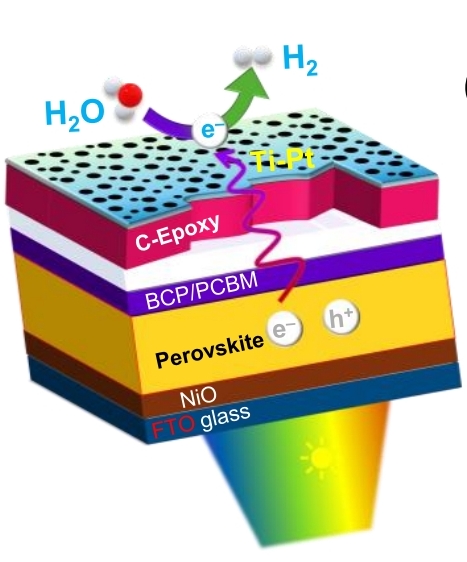
El sistema desarrollado por investigadores de NTU Singapore sustituye la reacción convencional de evolución de oxígeno por oxidación de hidrazina para reducir el consumo energético y evitar la corrosión asociada al uso de agua de mar en dispositivos fotoelectroquímicos.
Why it matters: Don't let 'lab-breakthrough' hype distract your C&I clients; standard PV-to-Electrolyzer setups remain the only bankable path for green hydrogen in Europe.
Every few months, a lab-scale 'artificial leaf' makes headlines, promising to turn our oceans into a limitless fuel tank. As someone who has spent years explaining to skeptical C&I clients why they shouldn't wait for 'future tech' to de-carbonize, this latest perovskite-seawater hybrid from NTU Singapore triggers every alarm bell in my head. If you’re a developer in the Mediterranean or the North Sea looking for a maritime hydrogen angle, keep your checkbook closed.
The Hydrazine Elephant in the Room
The researchers claim they’ve solved the seawater corrosion problem—a major hurdle for standard PEM electrolyzers—by replacing oxygen evolution with hydrazine oxidation. Let’s be blunt: Hydrazine is a highly toxic, carcinogenic chemical often used in rocket fuel. The idea that we are going to solve a clean energy problem by pumping nitrogen-based toxins into a PEC (photoelectrochemical) device is a non-starter for European regulators. Under the EU’s REACH framework, managing hydrazine at the scale required for industrial hydrogen production would make the O&M costs of a standard offshore wind farm look like pocket change.
The Perovskite Stability Paradox
We are still struggling to get perovskite modules to survive 20 years on a dry rooftop in Seville without moisture ingress destroying the lead-halide structure. Putting an encapsulated perovskite cell directly into a saline environment is an engineering nightmare. While the researchers used 'encapsulation,' we know from field experience with brands like Oxford PV or Meyer Burger’s heterojunction R&D that the transition from a 'stable' 1,000-hour lab test to a 25-year bankable asset is a chasm most technologies fail to cross.
A Reality Check for Your Clients
If a client asks you if they should wait for integrated 'solar-to-H2' leaves instead of installing a standard 500kW PV array paired with a ThyssenKrupp nucera or Nel Hydrogen alkaline electrolyzer, your answer should be a hard 'no.' The energy penalty of desalination for standard electrolysis is actually quite small—roughly 0.1% of the total energy cost. Solving 'seawater electrolysis' by adding toxic additives is a solution looking for a problem that doesn't exist in the real world of PPA-backed projects.