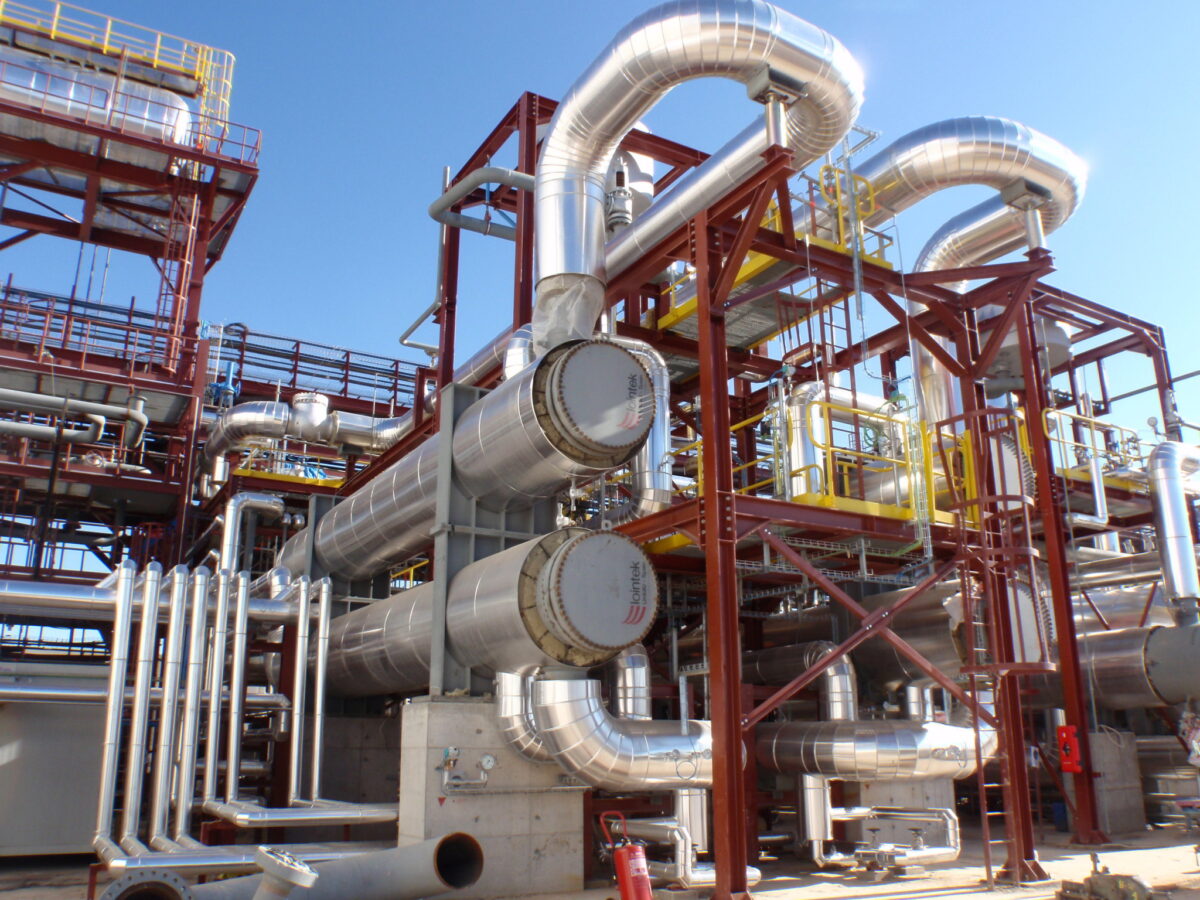
La empresa vasca ha sido responsable del diseño, fabricación y suministro de sistemas térmicos para la planta que desarrolla Highview, considerada la mayor instalación de este tipo en el Reino Unido.
Why it matters: Solar developers need 6+ hour storage to survive negative price windows; LAES is now a bankable, non-chemical alternative to lithium.
If you’re still thinking about storage solely in terms of 2-hour lithium-ion containers, you’re missing the 300MWh elephant in the room. Highview Power’s Carrington project isn't just another pilot; it's a 6-hour duration benchmark that uses proven industrial hardware from companies like Lointek. For a solar developer in Spain or the Netherlands currently getting hammered by negative midday prices, this is the blueprint for survival.
The 6-Hour Wall
Lithium-ion is fantastic for frequency response and short peaks, but once you try to stretch it past 4 hours, the CAPEX starts to bleed your IRR dry. Liquid Air Energy Storage (LAES) scales differently. By using cryogenic cooling to turn air into a liquid and then expanding it to drive a turbine, you aren't reliant on cobalt or volatile Asian supply chains. You’re using thermal systems designed in Urduliz, Bizkaia. This is mechanical engineering, not chemistry.
The ROI Reality: While the round-trip efficiency (RTE) of LAES sits significantly lower than lithium — often around 55-60% — the lifecycle is 30+ years with zero degradation. If you are developing a 100MW PV plant in Extremadura or Puglia, a 50MW/300MWh LAES system allows you to completely bypass the 11:00-16:00 price cannibalization window and dump power into the grid when the evening peak hits. Unlike a chemical battery, you aren't counting cycles or worrying about fire propagation in your planning permits.
Stop waiting for a solid-state miracle. The technology to bridge the overnight gap is already being manufactured in the Basque Country and shipped to the UK grid.