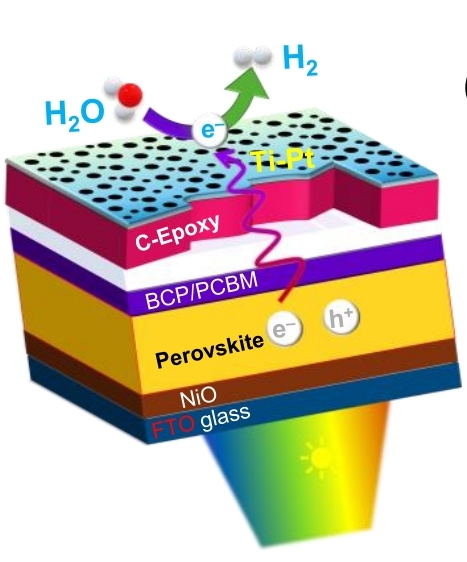
El sistema desarrollado por investigadores de NTU Singapore sustituye la reacción convencional de evolución de oxígeno por oxidación de hidrazina para reducir el consumo energético y evitar la corrosión asociada al uso de agua de mar en dispositivos fotoelectroquímicos.
Why it matters: Ignore the 'seawater' hype; unless a technology uses pure water and standard PV, it won't survive European H&S regulations or bankability audits.
The Hydrazine Red Herring
Let’s cut through the academic hype. The researchers at NTU Singapore claim a breakthrough in seawater hydrogen production by swapping the Oxygen Evolution Reaction (OER) for hydrazine oxidation. For a developer looking at the EU’s RED III targets, this should trigger immediate alarm bells. Hydrazine is a toxic, corrosive chemical used in rocket fuel. Suggesting we 'solve' the seawater corrosion problem by introducing a hazardous feedstock is like saying you’ve fixed a leaky roof by removing the house. In the real world of European permitting—think REACH regulations and strict health and safety protocols—handling hydrazine at scale would kill your project's ROI before the first shovel hits the ground.
The Perovskite Stability Myth
We’ve been hearing about the 'perovskite revolution' at every Intersolar for a decade. While the use of an encapsulated perovskite photocathode sounds sophisticated, the industry reality remains unchanged: stability is the only metric that matters. Installers in coastal regions like Puglia or the Costa del Sol deal with high salinity and UV degradation daily. A lab-grown 'artificial leaf' that bypasses desalination sounds great on paper, but if the encapsulation fails—and it always does under thermal cycling—you’re left with lead-leaking scrap metal in a marine environment. Current commercial alkaline or PEM electrolyzers might require purified water, but the cost of desalination is a rounding error compared to the CAPEX of a specialized, unproven photoelectrochemical (PEC) system.
The Real Market Signal
Don't get distracted by the 'seawater' gimmick. The real takeaway here is the industry’s desperate search for ways to lower the 1.23V theoretical limit of water splitting. Every 100mV saved is a massive boost to the Levelized Cost of Hydrogen (LCOH). However, for a European PV business, the play isn't in exotic PEC cells. It’s in oversizing DC-coupled PV arrays to drive down the cost of standard electrolysis. We are seeing 200MW+ projects in Spain and Portugal where the math only works because of massive scale and standardized components, not lab-scale chemical shortcuts.