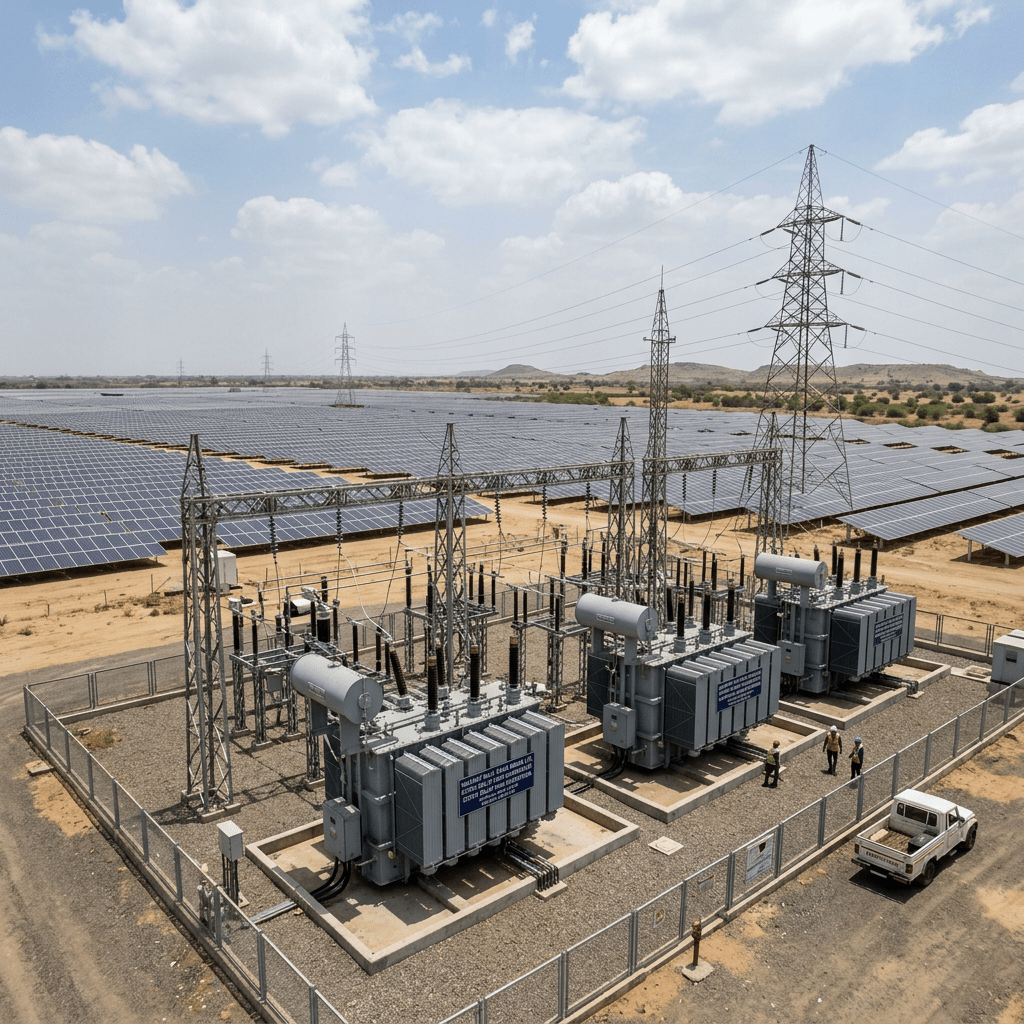
Participation is limited to Class-I Local Suppliers, requiring 50% local content. The tender includes financial stipulations, a contract period of 17 months, and online submission deadlines.
Why it matters: While EU developers struggle with 3-year waits for substations, India is leveraging local content rules to lock in 17-month delivery cycles.
If you are a project developer in Germany, Poland, or the Netherlands right now, you probably just winced at that 17-month contract period. While European EPCs are currently quoting lead times of 24 to 36 months for high-voltage power transformers, SECI is out here demanding five 160 MVA units delivered and commissioned in under a year and a half. This isn't just an Indian domestic story; it’s a benchmark of how far behind the European grid supply chain has fallen.
The Protectionist Playbook in Action
India’s "Class-I Local Supplier" mandate, requiring 50% local content, is exactly what the EU’s Net-Zero Industry Act (NZIA) dreams of being when it grows up. By forcing 50% of the value to stay within Indian borders, SECI isn't just building a project; they are de-risking their pipeline from the global scramble for grain-oriented electrical steel (GOES). When Siemens Energy or Hitachi Energy see these local content requirements, they are forced to prioritize local manufacturing hubs, potentially further stretching the capacity available for the European open market.
We’ve seen this pattern before with inverter availability in 2022. The difference now is that you can’t air-freight a 160 MVA transformer when your project is stalled. For European professionals, this tender is a reminder that while we focus on the "greenness" of our energy, the nations that focus on the industrial capacity of their grid hardware are the ones that will actually hit their 2030 targets.