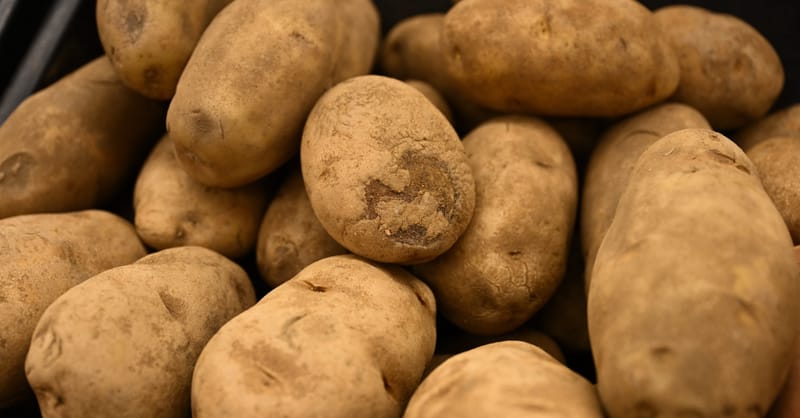
Is Frito-Lay categorically refusing to buy potatoes grown on farmland that has hosted solar installations? No, the company says. That hasn't stopped lawmakers in Michigan and Pennsylvania from spreading the false claim.
Why it matters: If you can't prove to a farmer's commercial buyer that PV doesn't contaminate the harvest, your agrivoltaic project will never reach financial close.
The 'Potato Panic' currently brewing in US state legislatures isn't just an American quirk; it’s a high-definition blueprint for the next wave of NIMBY obstructionism in Europe. While we’re busy debating the LCOE of vertical bifacial systems from Next2Sun versus elevated trackers from BayWa r.e., the real threat to the EU’s agrivoltaic (APV) ambitions isn't technical—it's the weaponization of the supply chain. If a major off-taker like Nestlé, Danone, or McCain Foods gets spooked by unsubstantiated claims of soil leaching or compaction, your 50MW project in Castile-La Mancha or Brandenburg is effectively dead before the first pile is driven.
The Supply Chain Veto
We’ve seen this playbook before. In the UK, it was the 'toxic panels poisoning sheep' myth. In Italy, it's the 'landscape preservation' argument that stalled projects in Puglia. The Michigan scenario is more dangerous because it targets the farmer’s wallet directly. For a professional installer, your client isn't just the landowner; it’s the landowner’s buyer. If the farmer can’t guarantee the 'purity' of their crop to a multinational buyer under a strict ESG framework, they won't sign the lease. You need to be prepared to counter this with hard data on soil health and the EU Nature Restoration Law, which actually supports integrated land use.
Weaponizing the French Model
Europe is currently the global laboratory for APV, particularly after France passed its March 2023 decree (Loi d’accélération des énergies renouvelables), which mandates that agricultural production must remain the primary activity on solar-shared land. This law is a double-edged sword. It provides a legal shield against 'solar-only' land grabs, but it also creates a regulatory hook for opponents to claim that any yield dip or 'perceived' quality issue violates the law. To win in this environment, stop selling 'solar' and start selling 'agricultural resilience.' Use specific metrics: show how 1,500mm of panel clearance allows for standard Massey Ferguson equipment, and cite the Fraunhofer ISE studies showing improved potato yields under shade during heatwaves like we saw in 2022.
The lesson for the European professional is clear: don't wait for the myths to cross the Atlantic. If you aren't walking into permitting meetings with a soil-toxicity report and a written endorsement from an agronomist, you’re bringing a knife to a gunfight.