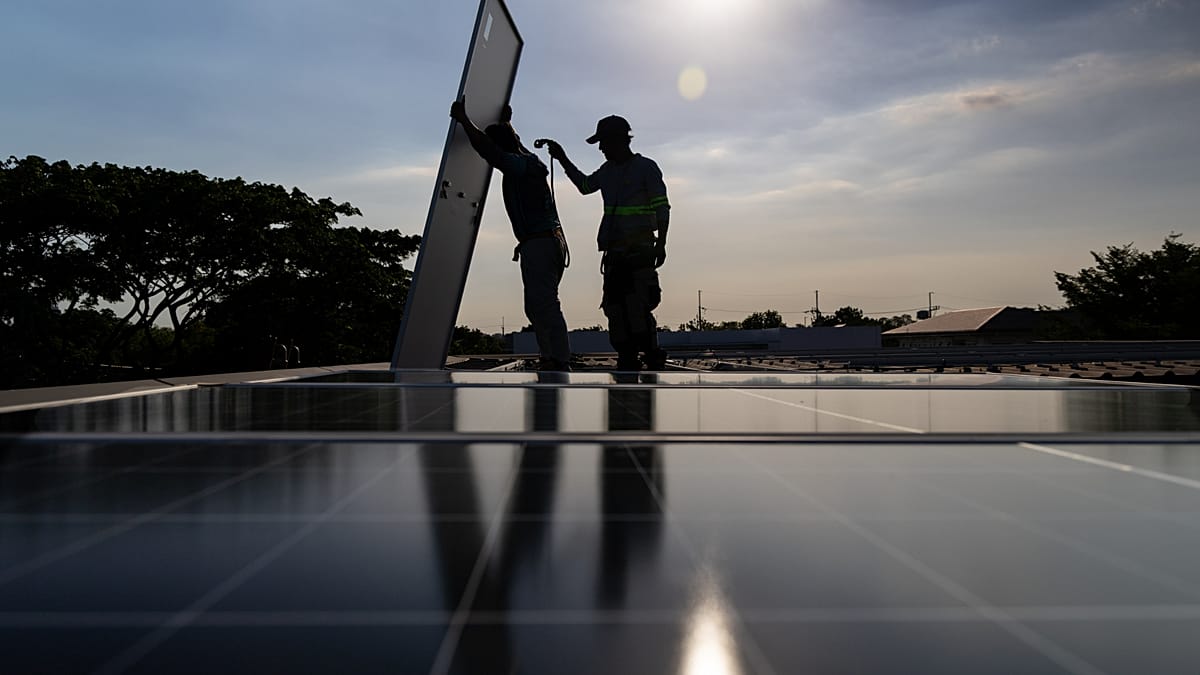
Soaring temperatures can actually hinder some kinds of renewable energy output, even sun-absorbing solar.
Why it matters: Stop selling kWh volume and start selling peak shaving and BESS integration, or your customers will face negative ROI during their highest production hours.
The Thermal Derating Reality Check
While the mainstream media frets about negative prices, field engineers are watching a different metric: the temperature coefficient (Pmax). If you are still installing legacy PERC modules with a -0.40%/°C coefficient in Southern Europe or even the baking summers of Germany, you are effectively handing your client a 10-15% haircut on performance exactly when they expect a peak. This is why the shift to N-type TOPCon or HJT isn't just a technical upgrade—it’s a defensive necessity. When ambient temps hit 38°C, roof-surface temps can easily exceed 65°C. At that point, a module with a -0.29%/°C coefficient isn't just 'better'; it is the difference between a system that hits its ROI targets and one that triggers a frustrated phone call from a CFO.
Negative Prices: The Cannibalization Effect is Here
We saw it in Spain last April, and we are seeing it across the DACH region now: solar is cannibalizing its own value. When prices hit -€20/MWh at noon, a 'dumb' grid-tied system becomes a financial liability for anyone on a spot-price contract. If you aren't integrating EMS (Energy Management Systems) like those from Solar-Log or SMA to trigger automated curtailment or BESS charging, you are building obsolescence into your projects. The era of 'install as many panels as the roof fits' is dead. We are now in the era of load-shifting architecture.