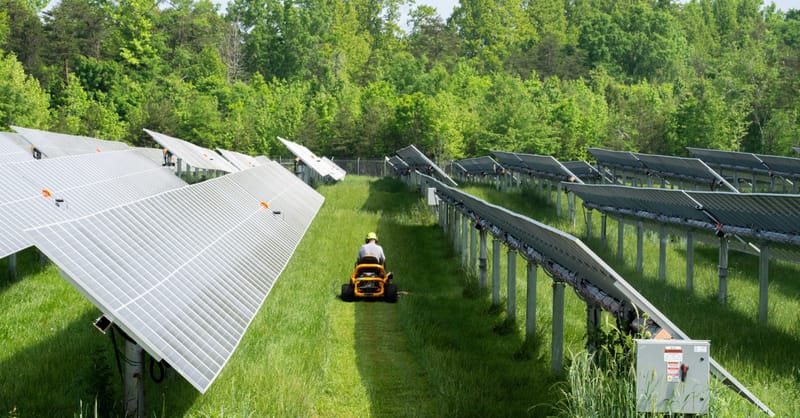
When Steve Ault got an offer about six years ago to lease a bit of his 100-acre family farm in Prince Edward County, Virginia, for solar panels, he let the letter sit on the kitchen table for a few days.
Why it matters: Community solar is moving from 'charity project' to a high-margin recurring revenue model—but only if you own the billing relationship and the software stack.
The Subscription Trap and the Grid Monopoly
While the feel-good story of a Virginia farmer leasing land makes for nice local news, European developers should look closer at the friction behind the headlines. Virginia is a 'closed' market dominated by Dominion Energy, a utility that has historically fought distributed generation. These new laws are a tactical retreat by the utility, forced by legislative pressure. This mirrors the current tension in Poland and Romania, where incumbents use 'grid stability' as a weapon to delay community-scale projects.
For an installer in the Netherlands or Germany, the Virginia case study highlights a critical pivot: The transition from EPC to Service Provider. In Virginia, the bottleneck isn't the DC-to-AC conversion; it's the billing. Managing 200 individual residential 'subscribers' on a single 5MW project is an administrative nightmare that eats margins alive. If you aren't already partnering with a specialized SaaS platform for energy community management, you're leaving roughly 15% of your project ROI on the table in administrative overhead alone.
The PPA vs. Community Reality
Don't get distracted by the 100-acre farm. The real battle is for metering data. In the EU, under the Renewable Energy Directive (RED III), member states are mandated to simplify these 'energy communities.' If you're building 500kW+ rooftops in industrial parks, you should be pitching a shared-savings model to the neighboring SMEs now. If you wait, the big aggregators will move in, lease those rooftops, and turn your potential clients into their subscribers.