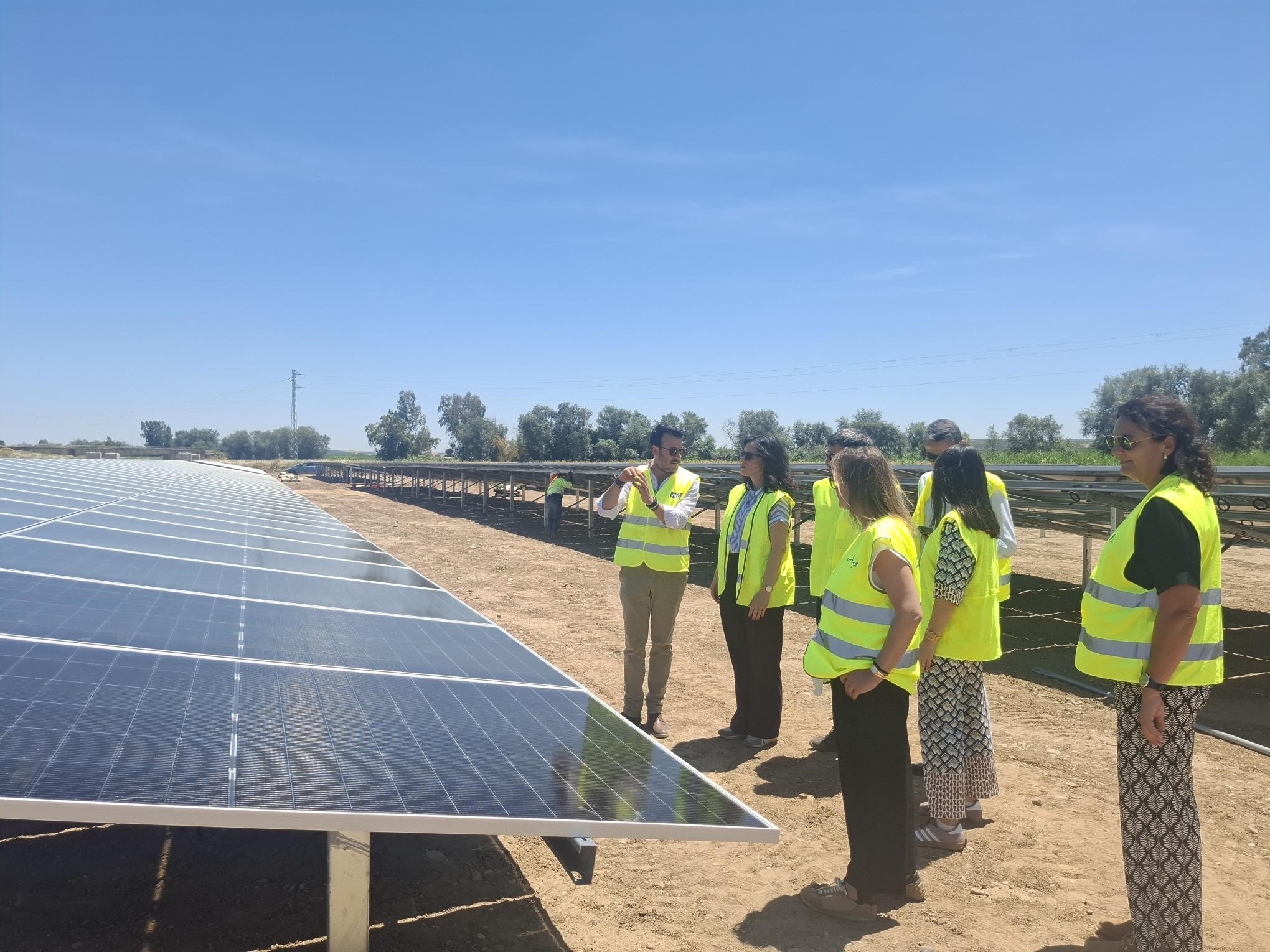
La Confederación Hidrográfica del Guadalquivir ultima la puesta en servicio de la planta fotovoltaica “La Grulla”, destinada a alimentar las estaciones de bombeo de Peñaflor y Ramblilla, que abastecen más de 6.000 ha de regadío en Palma del Río y Lora del Río.
Why it matters: Stop chasing 50kW rooftops when irrigation communities are moving toward 10MW self-consumption to survive rising energy costs.
When we talk about 'self-consumption' in Europe, most installers envision a 100kW rooftop on a warehouse or a 15kW residential system. The 9 MWp 'La Grulla' project in Andalusia completely shatters that small-scale mindset. This isn't just a solar plant; it’s a strategic utility asset disguised as a behind-the-meter project. If you are a developer in Spain, Italy, or Greece and you aren't targeting irrigation communities (Comunidades de Regantes), you are missing the most lucrative arbitrage opportunity in the market.
The Perfect Load Profile
Irrigation is the 'killer app' for solar PV. The load curve for pumping water is a near-perfect mirror of solar production—peak demand occurs exactly when the sun is strongest and the soil is driest. By deploying 9MW to power the Peñaflor and Ramblilla stations, the CHG (Confederación Hidrográfica del Guadalquivir) is effectively bypassing the MIBEL market volatility and avoiding the heavy grid access fees that plague high-voltage industrial consumers in Spain.
We’ve seen this pattern before: when electricity prices spiked in 2022, the 'smart money' moved into PPA-backed utility scale. But the real money is now moving into massive industrial self-consumption. Projects like 'La Grulla' don't need a subsidized feed-in tariff to make sense. They survive on the spread between the €0.04/kWh levelized cost of solar and the €0.12+/kWh retail industrial rate. For any installer with the engineering chops to handle 10MW systems, the message is clear: stop chasing 50kW rooftops and start looking for the water pumps.