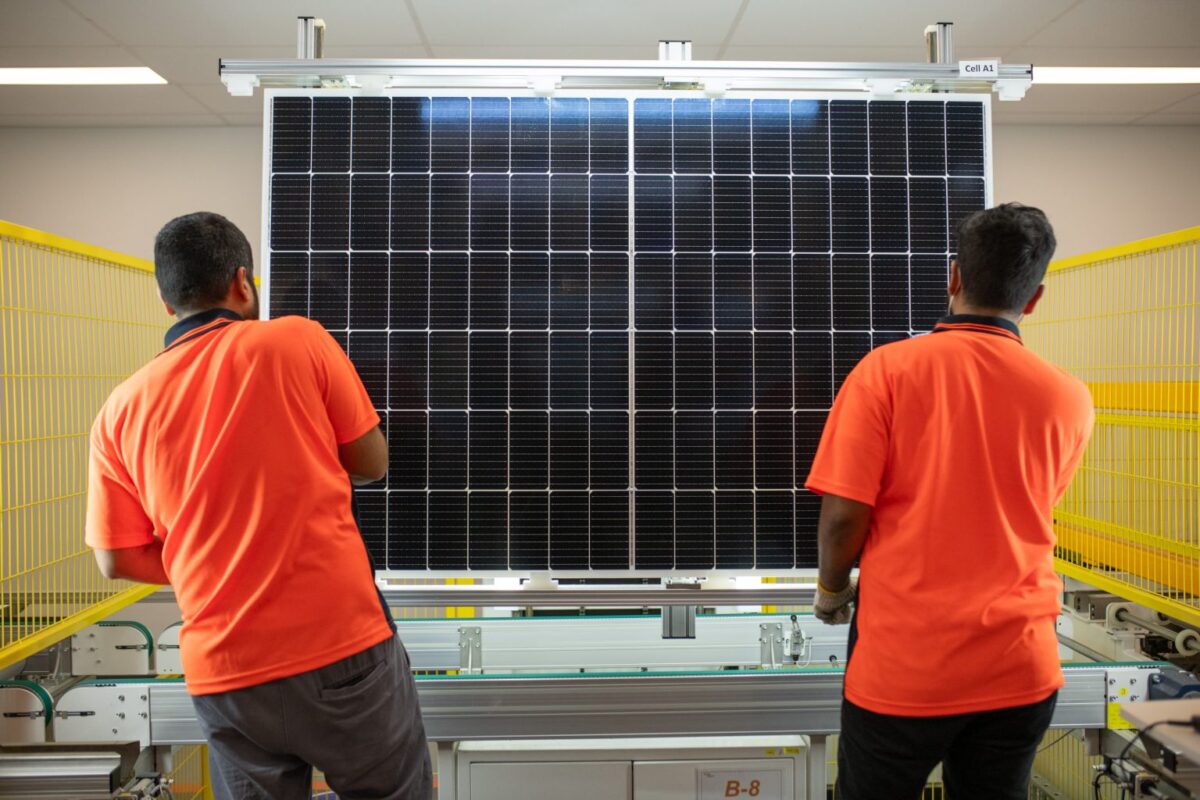
NSW will provide AU$225 million in new funding to support domestic manufacturing of low-carbon products and renewable energy components.
Why it matters: Global manufacturing is fragmenting; ignore local content trends and you'll be caught off-guard when EU trade barriers inevitably follow suit.
On its face, AU$225 million (€135 million) is a rounding error. To put that in perspective, a single Tier-1 cell factory in China often requires ten times that amount just for Phase 1. However, dismiss this news at your peril. New South Wales isn't trying to out-manufacture LONGi; they are participating in the global balkanization of the solar supply chain, and that has direct consequences for your procurement strategy in Rotterdam or Hamburg.
The End of the Globalized Discount
For a decade, European installers feasted on the efficiencies of a centralized, China-centric supply chain. That era is over. Whether it's the US Inflation Reduction Act, India’s PLI scheme, or this latest move from NSW, every major market is now ring-fencing its own manufacturing. For a developer in the EU, this means the 'world market price' for components is becoming a myth. We are moving toward a multi-tier pricing reality where domestic content requirements (like those lurking in the EU’s Net-Zero Industry Act) will force you to choose between cheap imports and 'compliant' local hardware.
The 'Meyer Burger' Lesson
We’ve seen this play out with Meyer Burger’s recent struggles in Germany. Small-scale domestic subsidies—like this AU$225M pot—rarely bridge the CAPEX gap needed to fight the economies of scale in Xinjiang or Jiangsu. Instead, they create 'boutique' manufacturers. For an EPC, this is a risk. If you spec a project with specialized Australian racking or BESS components because of a momentary supply glut, and that manufacturer folds two years later because their AU$225M safety net ran dry, your O&M costs just skyrocketed. Always check the balance sheet, not just the subsidy press release.
As Australia and others pull their demand inward, expect China to continue aggressive price-dumping into the EU to maintain factory utilization. Your margins might look good in the short term, but the regulatory backlash in Brussels is brewing. If you aren't diversifying your supplier list beyond the Top 5 Chinese majors now, you’re gambling on a status quo that the rest of the world has already abandoned.