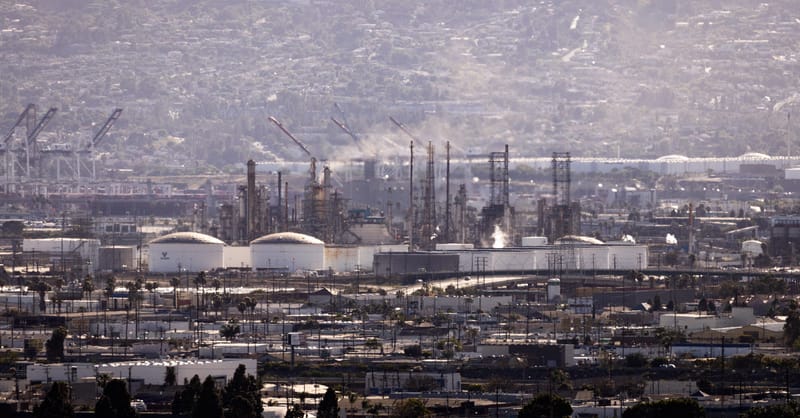
The California Air Resources Board on Friday approved major changes to the state’s cap-and-invest program, including a controversial plan to allow polluting industries to earn free emissions allowances if they invest in decarbonizing their facilities.
Why it matters: When carbon prices are diluted by political 'flexibility,' the financial urgency for your clients to switch to solar evaporates overnight.
The Price of 'Free' Carbon: A Warning to the EU
Don't dismiss this as 'California being California.' What CARB just did is a masterclass in how to erode the avoided cost logic that every C&I installer in Europe relies on. When you sit down with a manufacturer in Essen or Lyon to pitch a 2MW array, your strongest lever isn't 'saving the planet'—it's the brutal reality of carbon pricing under the EU ETS.
By handing out free allowances to 'polluters who try,' California is effectively softening the blow of high-carbon electricity. For a solar developer, this is a financial nightmare. In Europe, we are currently seeing EU ETS prices fluctuate between €60 and €80 per tonne. That cost is baked into every MWh your client buys from the grid. If the European Commission follows this 'decarbonization through freebies' logic—a risk as industrial lobbying intensifies to compete with the US Inflation Reduction Act—the financial urgency for on-site PV vanishes.
The Ripple Effect on European Portfolios:We’ve seen this pattern before. When Eastern European states gave coal-heavy utilities a 'long leash' via innovation funds, solar deployment lagged for years because the 'stick' wasn't heavy enough. Watch the upcoming EU ETS Phase 4 revisions. If 'flexibility' becomes the buzzword in Brussels, your 2026 pipeline is in trouble.