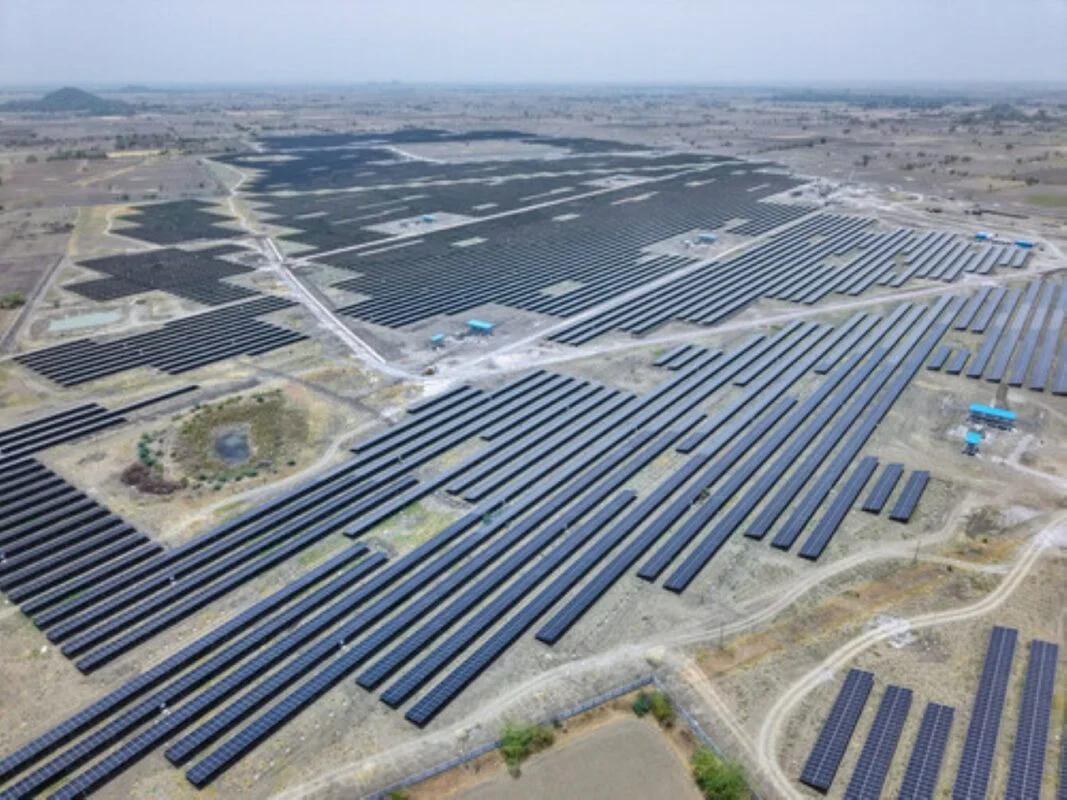
Indian independent power producer (IPP) Sunsure Energy has commissioned a 105MWp solar plant in Uttar Pradesh's Mahoba district.
Why it matters: European private equity is funding Indian grid-ready projects while your local developments stall in three-year interconnection queues.
On the surface, a 105MWp plant in Uttar Pradesh looks like just another line item in India’s 500GW by 2030 roadmap. But for the European developer currently banging their head against a wall in the TenneT or Amprion interconnection queue, the 'Green Energy Corridor-II' (GEC) framework under which this was built is the real story. While we in the EU treat grid upgrades as a reactive, 'wait-and-see' expense, the GEC-II is a proactive, multi-billion dollar infrastructure play designed to evacuate power before the modules are even out of the crate.
The Swiss Connection and the Capital Flight
Don't dismiss this as 'India news.' Sunsure Energy is backed by Partners Group, the Swiss private equity giant. This is European capital voting with its feet. When a firm in Zug decides to bankroll a 105MW project in Mahoba rather than a similar-sized asset in Brandenburg or the Peloponnese, they aren't just chasing sun hours; they are chasing certainty. In India, the GEC-II provides a dedicated highway for electrons. In Europe, we have a series of local B-roads where every municipality and distribution system operator (DSO) has a different set of toll booths and roadblocks.
The Technical Reality Check
We’ve seen this pattern before. Projects in the 100MW+ range in India are now hitting CAPEX levels below €0.50/Wp, frequently utilizing JinkoSolar or Adani bifacial modules and Huawei or Sungrow string inverters. For an EPC in Spain or Italy, these numbers are a nightmare to compete with, but the real threat isn't the hardware price—it's the speed of deployment. Sunsure moved from project award to commissioning at a pace that would be physically impossible under the current German BImSchG permitting regime.
The Corridor Blueprint
If Europe wants to stop the 'gridlock' from killing the C&I and utility-scale margins, we need to stop viewing the grid as a utility service and start viewing it as a dedicated solar corridor. The Dutch grid is at 'code red' for almost 70% of its capacity. If we don't adopt a GEC-style model—where transmission is built ahead of the solar boom—we will continue to see the smartest European capital flows migrate to markets that actually know how to move an electron from point A to point B.