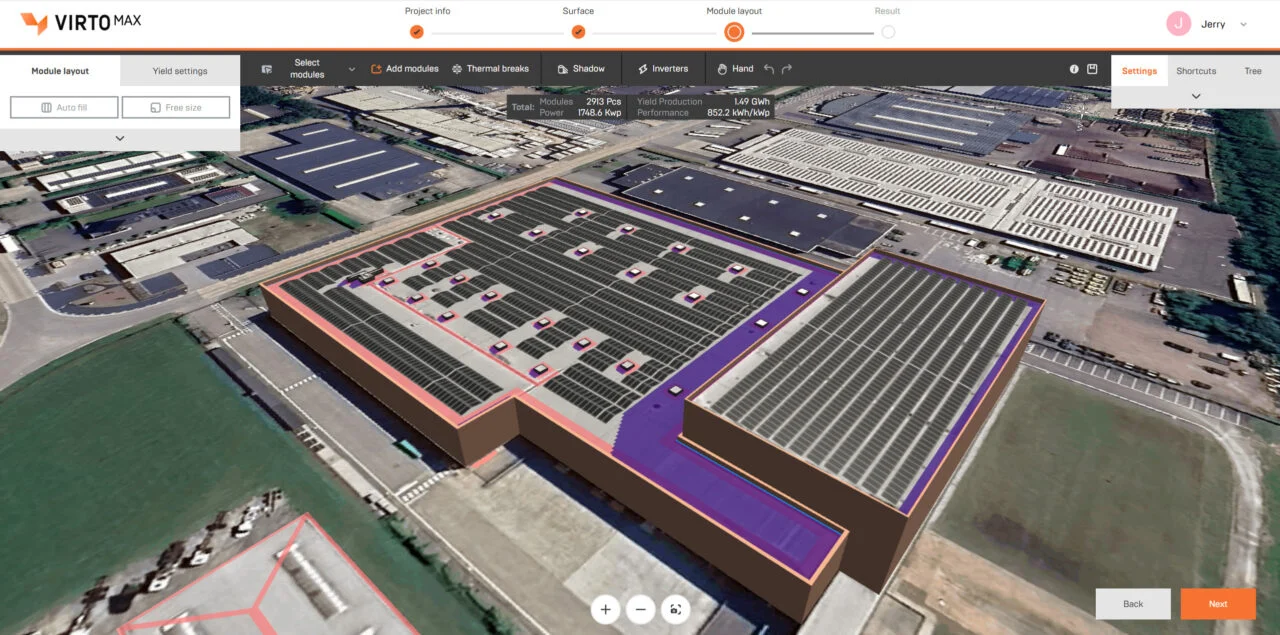
Virto.MAX is built for sales teams and project developers of commercial & industrial PV to create designs of roof, ground and carport projects.
Why it matters: If your sales tool doesn't account for real-world structural constraints, you're just writing checks your engineering team can't cash.
The High Cost of Sales-Engineering Friction
We’ve all been there: a sales rep uses a basic tool to promise a 1.2MW rooftop layout to a C&I client, only for the structural engineer to slash it to 800kW because they didn't account for Eurocode 1 wind loads or skylight keep-out zones. In the current European market, where margins are being squeezed by aggressive Chinese module pricing and rising labor costs in Germany and the Benelux, you cannot afford to sell a design that isn't buildable. The 'conceptual' phase is where most C&I projects actually die.
Software like Virto.MAX is entering a crowded arena, but its specific focus on carports is the strategic 'tell.' If you're an installer in France, you're currently staring down the Loi d'accélération des énergies renouvelables, which mandates solar on parking lots over 1,500 m². You can't just slap a standard racking system on a 1:100 drawing; you need automated tools that handle the structural complexity of carports without requiring a full CAD team for every lead in the pipeline.
The Bankability Trap
The real test for any design tool isn't the UI; it's the data integrity of the export. If your conceptual design doesn't play nice with PVsyst for bankability reports or K2 Base for structural validation, it’s just a fancy PowerPoint generator. For a Dutch developer dealing with SDE++ subsidies, the precision of that initial shading analysis can be the difference between a profitable project and a 20-year liability. Don't buy software just to impress the client; buy it so your EPC lead doesn't have to redesign the entire array from scratch three weeks before the modules arrive on site.