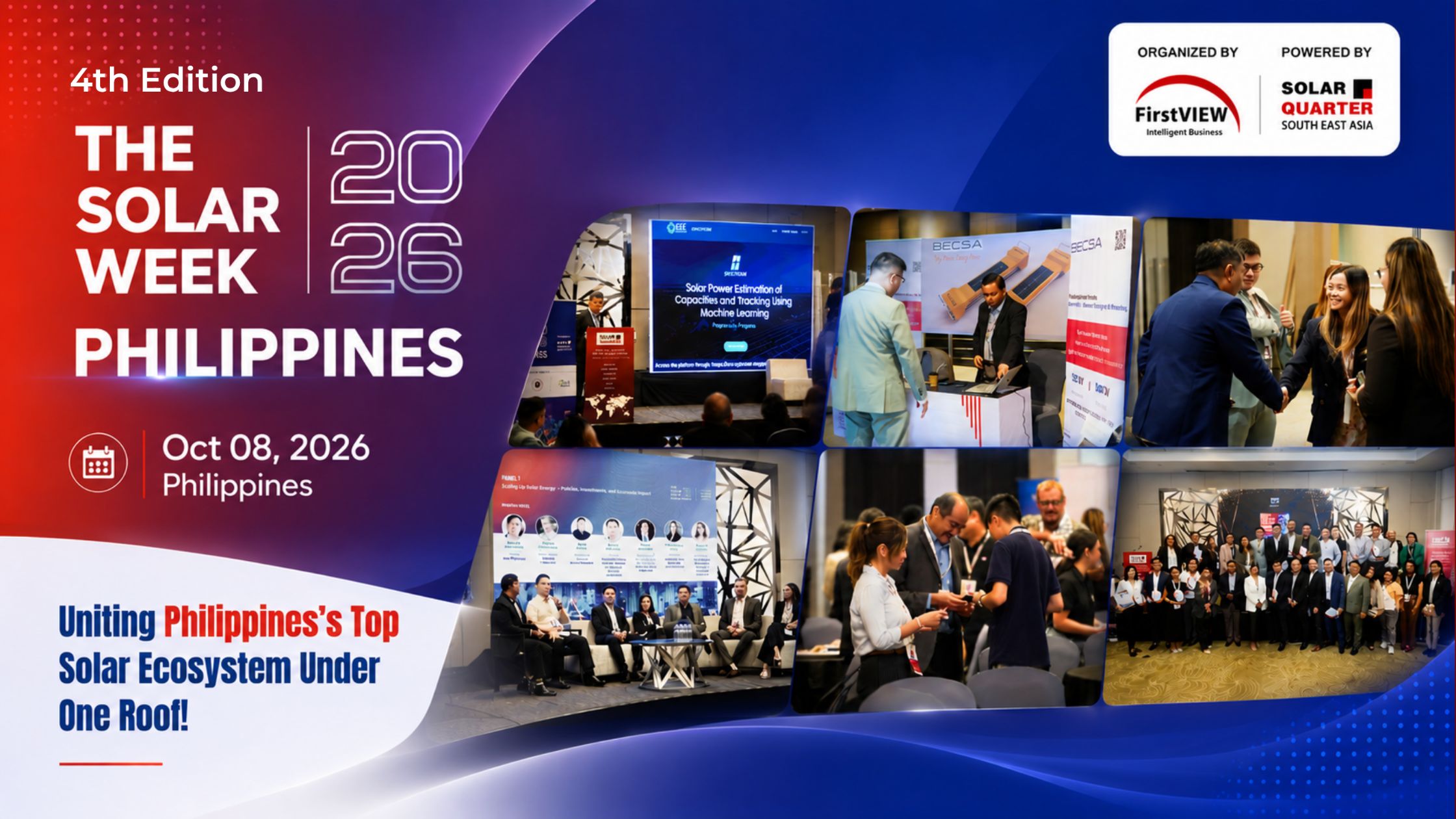
The Solar Week Philippines 2026, on October 8, will unite industry leaders to discuss solar deployment, energy storage, and investment trends, fostering collaboration and knowledge sharing to drive the nation’s clean energy transition.
Why it matters: The Philippines' high energy prices and 20GW solar target offer a high-margin escape hatch for European EPCs facing saturated home markets.
While many European installers are currently bogged down by the residential slowdown in Germany or the grid-congestion nightmares of the Netherlands, the Philippines is quietly becoming the most lucrative playground for high-end engineering. This isn't just another "emerging market" headline; it’s a specific call to action for firms that have mastered complex utility-scale and C&I projects.
The High-Margin Escape Hatch
The math in the Philippines is brutal for consumers but beautiful for solar developers. Electricity prices in Manila often hover around €0.18 to €0.22/kWh—some of the highest in Asia. Unlike the EU, where we are fighting over cannibalized day-ahead prices that hit zero at noon, the Philippines has a desperate, structural need for baseload-shifting solar. Their Green Energy Auction Program (GEAP) is targeting nearly 20GW of new renewables by 2030. For a European EPC, this is the chance to export expertise in a market where "European quality" still allows for a margin premium that has long since vanished at home.
The Floating PV Blueprint
We’ve seen the land-use conflicts in Italy and France. The Philippines is solving this by going offshore and inland-water. Companies like ACEN are already moving on massive floating PV (FPV) projects on Laguna Lake, totaling over 1.1GW. If your firm has experience with Zimmermann PV-Tracker systems or specialized floating mounts, you are five years ahead of the local competition. The archipelago's geography isn't a barrier; it's a moat for those who know how to build in high-corrosion, typhoon-prone environments.