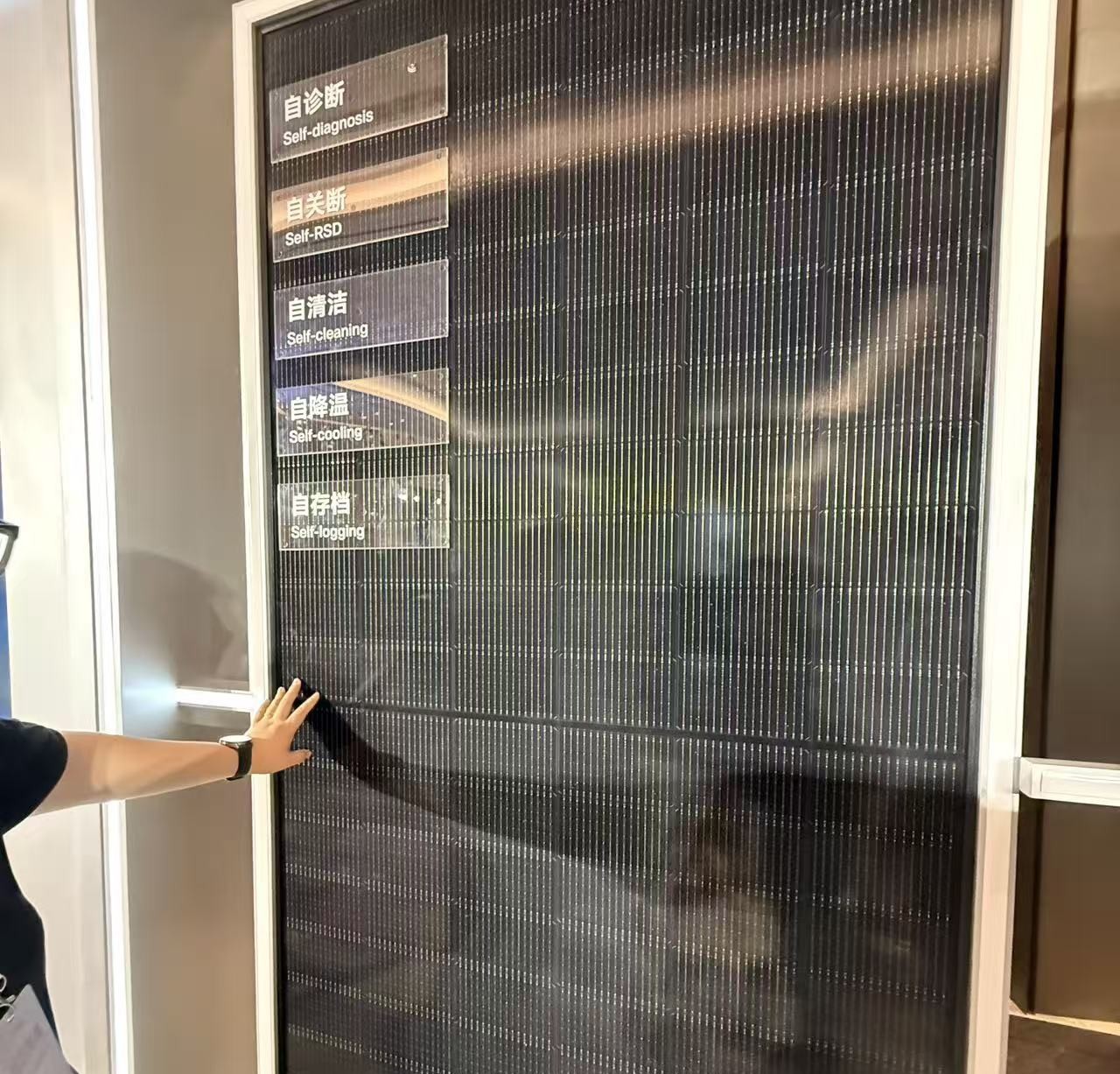
El módulo fotovoltaico integra funciones de diagnóstico basadas en IA, desconexión rápida, autolimpieza, autorrefrigeración y gestión de datos del ciclo de vida.
Why it matters: Integrated electronics speed up installation but create a single point of failure that could turn your O&M margins into a liability.
The Complexity Trap
Sungrow is following the classic hardware trajectory: when you can’t squeeze more efficiency out of the cell (TOPCon is hitting its stride, but the gains are incremental), you start adding gadgets. Integrating Power Electronics (MLPE) directly into the module is a double-edged sword that every European installer needs to weigh carefully before pitching this to a C&I client in Germany or the Netherlands.
The Good: Built-in Compliance
By baking in Rapid Shutdown (RSD) and AI-driven diagnostics, Sungrow is addressing the tightening fire safety regulations across the EU. We’ve seen the shift toward module-level electronics driven by SolarEdge and Enphase, but those are external components. Integrated electronics simplify the initial install—fewer SKUs to manage and less time on the roof. If the 'self-cooling' tech actually mitigates the 0.3% efficiency loss per degree Celsius above STC, the ROI for rooftop projects in Southern Spain or Italy becomes much more attractive.
The Bad: The 'Replace, Don't Repair' Problem
Here is the field reality: if an optimizer fails on a standard setup, you swap the optimizer. If the AI controller or the 'self-cooling' mechanism fails inside this integrated Sungrow module, you’re likely replacing the entire 450W+ panel. In a labor-market like Denmark or Belgium, where a truck roll costs €250 minimum, the lifecycle costs of 'smart' hardware can quickly eat the 2-3% yield gains. Strong caution: verify the warranty terms on the electronics versus the glass. If the AI board dies after 12 years but the cells are rated for 30, you’ve got a massive headache.
The Lock-in Effect
By moving 'lifecycle data management' into the module, Sungrow is building a proprietary moat. You aren't just buying panels; you’re buying into an ecosystem. For developers, this means simplified O&M through their iSolarCloud platform, but it also means you’re married to one manufacturer for the next 25 years. Before jumping in, ask yourself: does the marginal yield increase justify losing your hardware agnosticism?