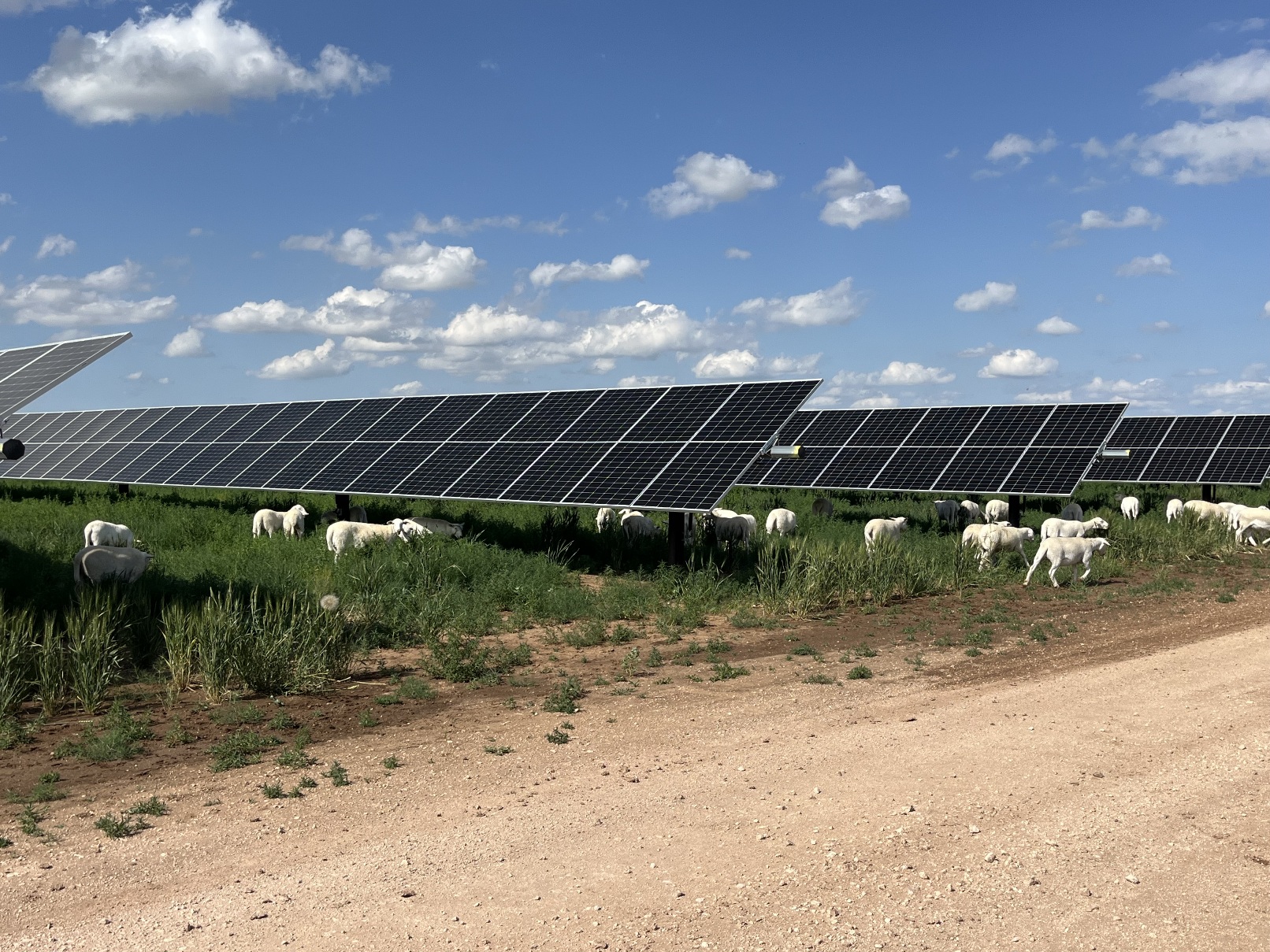
Vesper Energy has secured $236 million in financing for its 201-MW Nazareth Solar project in Texas, expected to power around 53,000 homes.
Why it matters: Benchmarking your EPC and financing costs against a $1.17/Watt utility-scale project shows exactly how far European efficiency must climb to remain competitive.
The $1.17 per Watt Reality Check
When you strip away the press release fluff, the Nazareth project reveals a cold, hard number: $1.17 per watt (€1.08/W). For European utility-scale developers, this is the yardstick that should keep you up at night. While we are struggling with stubborn labor costs and soft-cost bloat in markets like Germany and France, Texas continues to demonstrate how to build at scale with ruthless efficiency. If your EPC costs for a 200MW+ project in the Alentejo or Andalusia aren't trending significantly below this, you're losing the global competitiveness race.
The ERCOT Advantage vs. EU Gridlock
Vesper is hitting a construction start in mid-2026 with operations by 2027. In the ERCOT (Texas) market, that's a standard timeline. Contrast that with a project of similar scale in Italy or Poland, where grid connection queues and 'environmental impact' NIMBYism can turn a three-year cycle into a decade-long odyssey. The real lesson here isn't about the technology—it's about capital velocity. The ability to secure $236 million and have it earning revenue within 18 months of breaking ground is a financial superpower that European regulatory frameworks currently lack.
The Hidden Engine: Tax Credit Transferability
Why is a project in Nazareth, Texas, getting funded while European C&I and utility-scale projects are seeing term sheets tighten? Look at the IRA’s transferability provisions. Vesper is likely leveraging a streamlined market for tax credits that provides immediate liquidity. In the EU, we are still waiting for a unified, transparent mechanism that matches this simplicity. Until we move past the fragmented 'National Energy and Climate Plans' (NECPs) and create a truly liquid market for green attributes, European developers will continue to pay a 'complexity premium' on their financing that their Texan counterparts simply ignore.