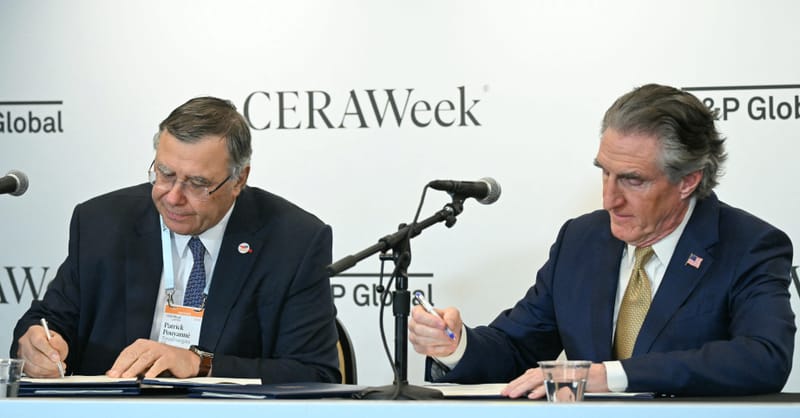
New York and six other Democratic-led states are challenging the Trump administration’s controversial efforts to pay private energy firms to abandon their U.S. offshore wind projects.
Why it matters: If TotalEnergies gets paid to quit US wind, they’ll bring that 'free' capital back to Europe to outbid you on the next solar tender.
We’ve seen some strange things in this industry, but the U.S. Department of the Interior paying a French supermajor like TotalEnergies to not build a power plant is a new level of market distortion. For those of us in the European trenches, this isn't just American political theater; it’s a warning shot about the fragility of the 'certainty' we lean on when bidding for long-term projects.
The Capital Reallocation Threat
TotalEnergies isn't just going to sit on that cash. If they are being paid to exit the U.S. offshore market, that capital is going to fly back across the Atlantic. We’ve already seen Total’s aggressive bidding in German offshore auctions—shelling out €1.26 billion for sites N-12.1 and N-11.1. When a major gets a payout to quit one market, they often use that war chest to bully their way into another. For mid-sized European developers, this means competing against a 'zombie' project fund that doesn't need to worry about immediate ROI because the U.S. taxpayer just de-risked their balance sheet.
The Contractual Poison Pill
The real danger here is the precedent of sovereign risk. We tell our investors that once the PPA is signed or the lease is won, the project is 'safe.' This lawsuit proves that even in supposedly stable jurisdictions, a change in administration can turn a 20-year infrastructure plan into a political bargaining chip. If you're an EPC or an installer working on C&I projects in Poland or Hungary, you’ve felt this vibe before. But seeing it happen to a firm with the legal muscle of TotalEnergies should make everyone check their force majeure clauses.
Bottom line: TotalEnergies is getting a 'golden handshake' to leave the room. In the short term, it cleans their books. In the long term, it makes every renewable energy contract on the planet look a little more like a suggestion and a little less like a law.