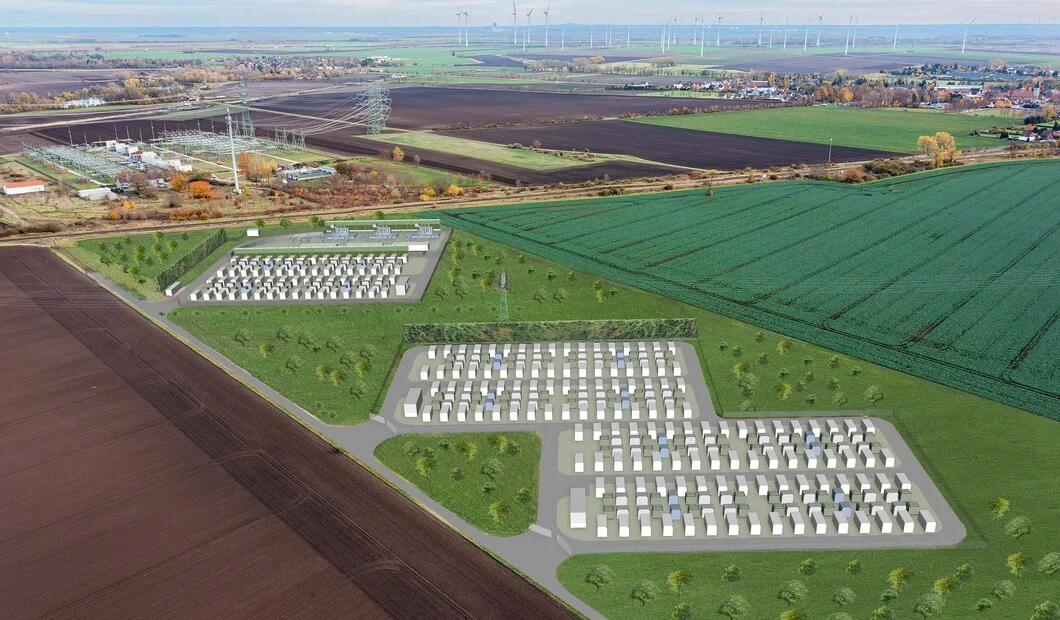
Owner-operator Eco Stor has secured a long-term toll with utility Next Kraftwerke for its 300MW/700MWh project in Förderstedt, Germany, one of the largest being built in the country.
Why it matters: Merchant risk is becoming unbankable in Germany; if you aren't partnering with an aggregator for long-term tolling, your large-scale BESS project will never reach financial close.
If you’re still telling investors that merchant-tail models are the only way to get double-digit IRRs in German storage, this deal should make you pause. The Eco Stor and Next Kraftwerke agreement isn't just a contract; it’s a white flag raised against the volatility of the day-ahead and intraday markets. We are entering the Era of the Offtake for BESS, mirroring what happened in wind and solar a decade ago.
The Death of the 'Firecracker' Battery
Look at the specs: 300MW with 700MWh of capacity. That’s a 2.3-hour duration. For years, the German market was dominated by 1-hour systems designed to cannibalize the Frequency Containment Reserve (FCR) market. But FCR is saturated, and prices have cratered. By building for a longer duration and handing the keys to Next Kraftwerke via a tolling agreement, Eco Stor is pivoting to automated frequency restoration reserve (aFRR) and structural arbitrage. They are trading the 'moonshot' profits of a merchant model for the bankability required to scale.
Why Next Kraftwerke?
In the field, we’ve seen too many developers try to build their own trading desks only to get mauled by negative price events or botched algorithm execution. Next Kraftwerke is the heavyweight champion of Virtual Power Plants (VPPs) in Europe. For a project developer in Brandenburg or Bavaria, the lesson is clear: your expertise is in land, permitting, and HV-connection. Do not pretend to be a quantitative hedge fund. Banks in the EU are currently tightening their belts; they want to see a tolling agreement or a floor price before they release the debt for a 700MWh CAPEX outlay.