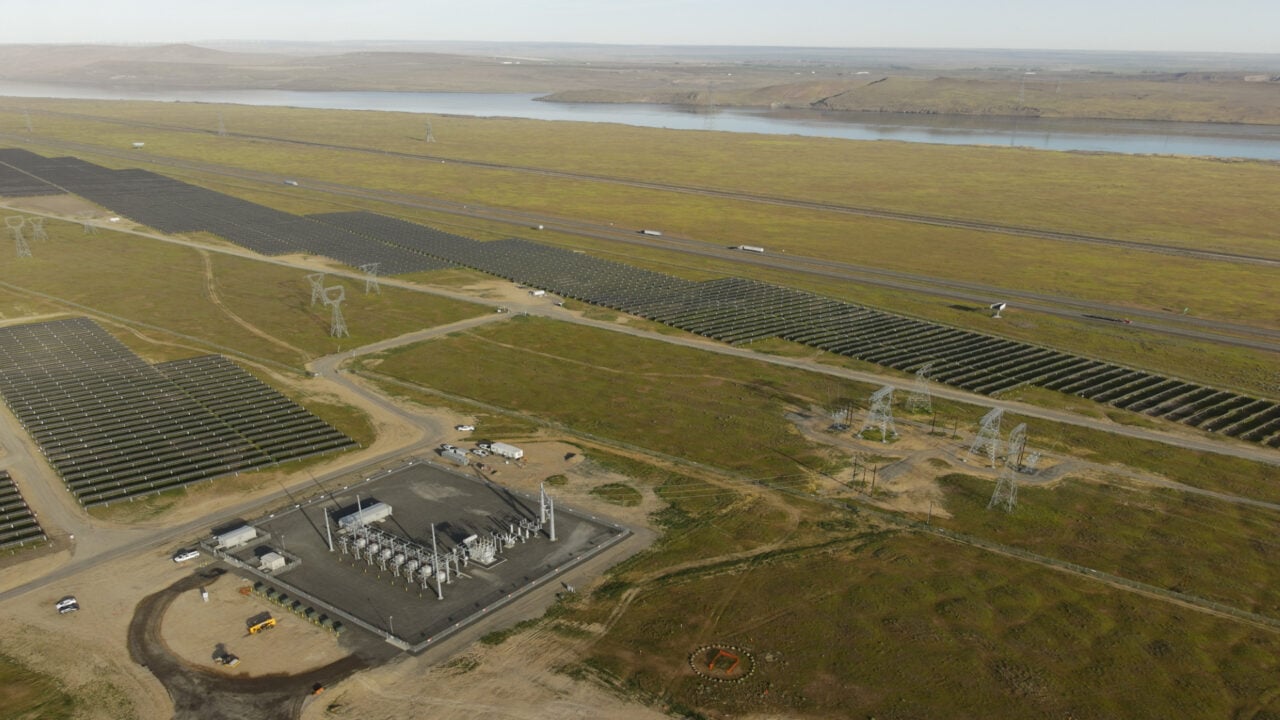
Avangrid has completed construction of its 166MWdc Tower Solar project in Oregon and connected the facility to the regional transmission grid.
Why it matters: Iberdrola’s capital is fungible; they will build where the grid is accessible, and currently, that is the US, not the EU.
While European developers are still untangling the knots of the RED III implementation, Iberdrola’s US subsidiary, Avangrid, just quietly energized 166MW in Oregon. For a solar professional in Germany or Spain, this isn't just another US press release; it is a clear signal of where the world’s deepest pockets are finding the path of least resistance. When a Spanish utility giant chooses the moderate irradiance of the Pacific Northwest over its own backyard in the Mediterranean, you have to look at the math.
The Capital Flight Reality
Iberdrola is currently executing a €41 billion investment plan. The fact that they can move 166MW from groundbreaking to grid-connection in a state like Oregon—which isn't exactly the Wild West of deregulation—should embarrass EU regulators. In Germany, a project of this scale would likely be caught in a VDE-AR-N 4110 certification bottleneck or stalled by a local municipality’s sudden interest in rare beetle migration. In Oregon, the 'Tower Solar' project reflects a streamlined 'Commercial & Industrial' logic that we are desperately missing.
The Grid Connection Gap
The real 'war story' here is the grid connection. In the Netherlands or Poland, 160MW would trigger a three-year wait for a transformer upgrade. Avangrid’s ability to plug this into the regional transmission grid suggests a level of utility coordination that remains a pipe dream for most EU installers. If you are an EPC in Poland or Romania, you are competing for the same Sungrow or SMA central inverters that Avangrid is buying in bulk. Every time a project like this crosses the finish line in the US, it tightens the supply chain for European projects that are still stuck in permitting purgatory.
The takeaway: Don't look at this as an American win. Look at it as a European opportunity cost. Until we fix the grid-access timeline, the Tier-1 developers will keep chasing the 30% Investment Tax Credit (ITC) and the 'plug-and-play' reality of the US market.