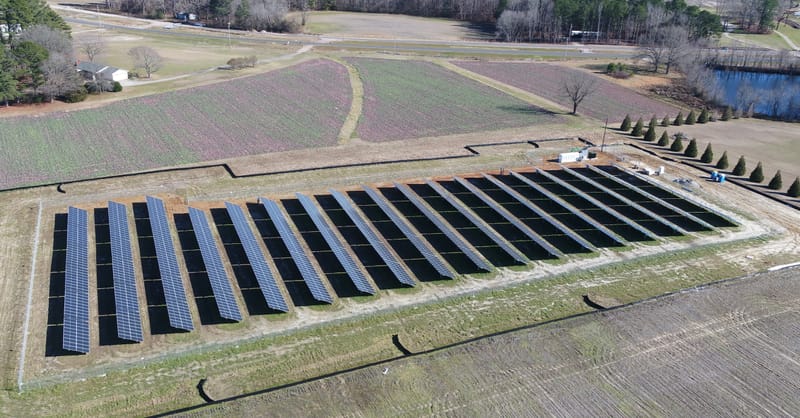
In July 2022, a fierce summer storm rocked Wake Electric... Wind downed lines and knocked out power for thousands.
Why it matters: Stop selling 'green energy' and start selling 'uninterruptible operations'—resilience is the only way to protect your margins as hardware prices continue to crater.
While many European installers are still obsessing over narrowing day-ahead price spreads for arbitrage, North Carolina’s cooperatives are demonstrating that the real long-term value of BESS lies in reliability-as-a-service. Wake Electric isn't just buying lithium-ion to play the market; they are building a decentralized insurance policy against a fragile grid. For the European professional, this is a look at the future of Renewable Energy Directive (RED II) implementation across the continent.
The 'Island Mode' Upsell
In mature markets like Germany or the Netherlands, we’ve spent a decade selling PV on ROI and self-consumption. But as grid congestion worsens and extreme weather—like the 2021 Ahr Valley floods—becomes more frequent, the pitch must shift. If you aren't talking to your C&I clients about black-start capability and galvanic isolation, you’re leaving margin on the table. A 500kWh BESS behind the meter is a luxury; a 500kWh BESS that keeps a logistics hub running when the medium-voltage line fails is an essential business asset.
The Cooperative Blueprint
The NC model mirrors the rise of European Energy Communities (Comunidades Energéticas in Spain or Energiegemeinschaften in Austria). These entities are moving beyond simple collective self-consumption toward providing actual grid services. We are seeing a shift where BESS is no longer an accessory to solar, but the foundation of the local microgrid. If you're an installer in the EU, you should be evaluating hardware like the Sigenergy SigenStor or Huawei’s LUNA2000 series not just as storage, but as grid-forming nodes. The North Carolinians realized that decentralized storage is cheaper than hardening 50km of distribution lines. European DSOs (Distribution System Operators) are reaching the same conclusion, and they will eventually pay your customers to help them avoid those massive CAPEX costs.