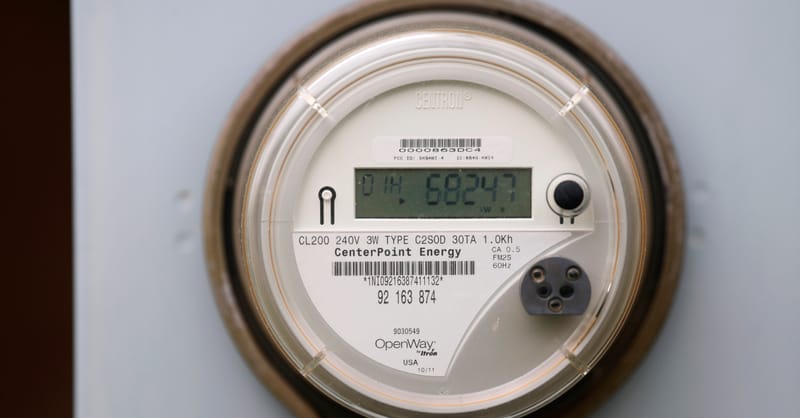
Utilities have spent nearly $6 billion to install roughly 12 million smart meters at homes and businesses across PJM Interconnection, the biggest U.S. energy market. These devices are meant to help their customers use energy more efficiently and save money. But within much of PJM’s 13-state territory, these devices…
Why it matters: If you rely on utility data for your VPP or HEMS performance, you are giving your competitor—the utility—a kill-switch for your business model.
If you think the data bottleneck is just an American problem, I have a bridge in the Peloponnese to sell you. The PJM situation—where billions are spent on hardware that remains effectively lobotomized by utility gatekeepers—is the nightmare scenario for the European Energy Data Space. We are watching a 12-million-unit cautionary tale of what happens when you let the fox guard the data-henhouse.
The 'Dumb' Smart Meter Trap
In the EU, we have the Electricity Directive (2019/944) which theoretically guarantees consumers access to their data. But walk onto any site in France with a Linky meter or deal with a German iMSys rollout, and you’ll see the friction. Utilities love 'smart' meters for billing and remote disconnects; they loathe them for enabling third-party aggregators who steal their 'customer relationship' (read: margins).
The Margin of Silence
Why should a solar business owner in Berlin or Madrid care about a PJM utility in Pennsylvania? Because your ROI calculations for C&I battery storage rely on 15-minute settlement periods. If the utility throttles that data, your EMS (Energy Management System) is flying blind. You can't perform peak shaving or frequency response if you're waiting for a utility portal to update at midnight. We’ve seen this play out with EDF and Enel—compliance with EU law is often the bare minimum, designed to frustrate third-party tech. If you aren't spec’ing hardware that gets you real-time data independent of the utility’s goodwill, you are building on shifting sand.