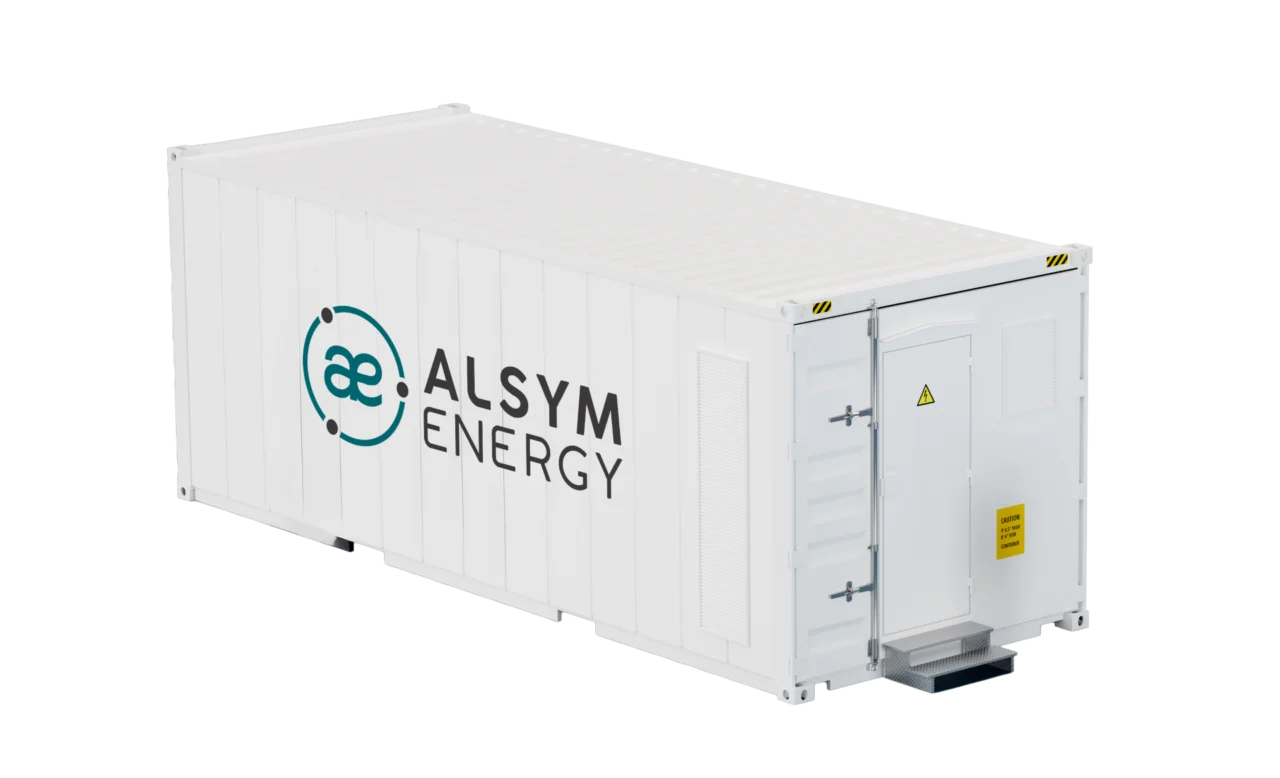
US sodium-ion (Na-ion) battery startup Alsym Energy and domestic manufacturing company Re:Build Manufacturing are partnering to develop commercial-scale battery cell manufacturing capacity in the US.
Why it matters: Sodium-ion's lack of thermal runaway will soon make it the only logical choice for indoor C&I projects in fire-sensitive EU jurisdictions.
The Fire Safety Arbitrage
If you have tried to permit a 1MWh LFP container in a dense German industrial park lately, you know the headache of fire suppression requirements. Alsym’s move into high-volume sodium-ion isn't just about escaping the lithium supply chain; it's about a fundamental chemistry shift that eliminates thermal runaway risk. For European installers, this is the 'holy grail' for indoor C&I deployments where VDE-AR-E 2510-50 compliance currently adds thousands in structural costs. Sodium-ion doesn't just lower the bill of materials; it lowers the 'soft costs' of not burning the building down.
Breaking the LFP Price Floor
We’ve been riding the LFP price curve down toward $50/kWh at the cell level in China, but we’re hitting a floor dictated by lithium carbonate volatility. Sodium-ion targets a 30% lower bill of materials by swapping lithium for abundant salt and eliminating copper in the current collector. While Alsym is scaling in the US with Re:Build, the signal to the EU market is clear: the stationary storage market is bifurcating. LFP will remain for high-density EV needs, but for stationary storage where weight is secondary—like a 500kW rooftop project in Rotterdam—sodium is the rational choice.
The O&M Game Changer
We’ve seen the 'capacity fade' dance with LFP for years. Sodium cells, however, can be shipped and stored at zero volts. They are fundamentally more robust. If you are a developer in Spain or Italy signing 15-year O&M contracts, sodium-ion represents a massive reduction in long-term liability. You aren't just buying a battery; you're buying a chemistry that doesn't punish the end-user for a deep discharge. If you aren't asking your distributors about their 2025 sodium roadmap today, you’re planning to fail.