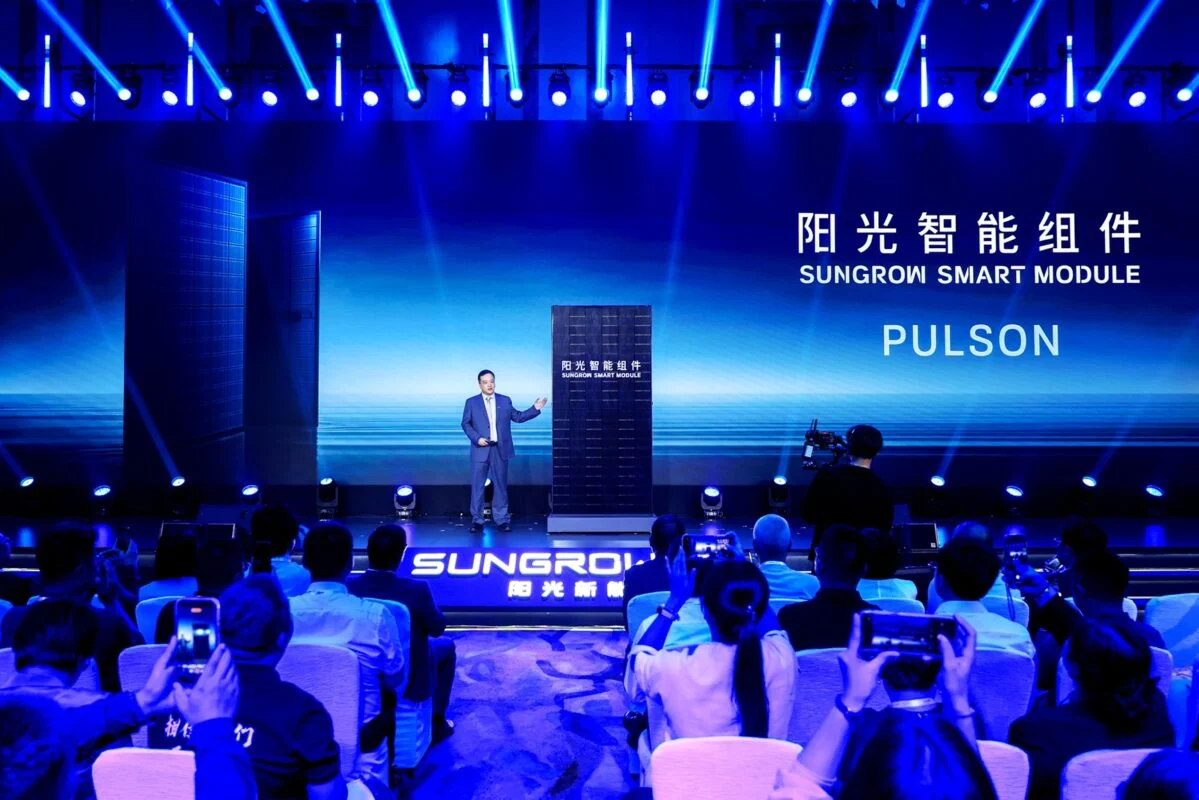
Chinese PV inverter and BESS manufacturer Sungrow has entered the PV module manufacturing market with a new "smart module" product, dubbed Pulson.
Why it matters: One brand for the entire BoS simplifies your supply chain and support, but it hands Sungrow total control over your project's technical future.
It takes a certain level of audacity to enter the module manufacturing game when Tier 1 prices are hovering around €0.10/Wp and half the industry is bleeding cash. But Sungrow isn't playing the commodity game with Pulson; they’re playing the ecosystem game. By integrating "AI-enabled" smarts—which is industry-speak for factory-fitted MLPE (Module Level Power Electronics) or advanced sensing—they are moving to capture the last piece of the hardware margin left on the table.
The 'Single Throat to Choke' Strategy
For a mid-sized EPC in Germany or the Netherlands, the appeal is obvious. When a 5MW C&I site underperforms, you don't want to spend three days on hold with three different support lines. Sungrow is betting that you'll pay a slight premium for the convenience of having the inverter, the BESS, and now the module under one warranty umbrella. If their 1+X modular inverter and Pulson modules talk to each other better than a mismatched SMA/Jinko combo, they’ve effectively moved the goalposts from component efficiency to system-wide uptime.
The Proprietary Trap
We’ve seen this pattern before. Huawei flirted with optimization; LONGi tried to dominate the full stack. The risk for installers is the proprietary trap. If Pulson uses a specific communication protocol that only works with Sungrow’s iSolarCloud, you’re not just buying a panel; you’re marrying the brand. In a world where N-type TOPCon is becoming a genericized baseline, Sungrow’s real challenge isn't the "AI"—it’s proving that their first-gen glass can handle 25 years of European winters as well as their electronics handle grid fluctuations.