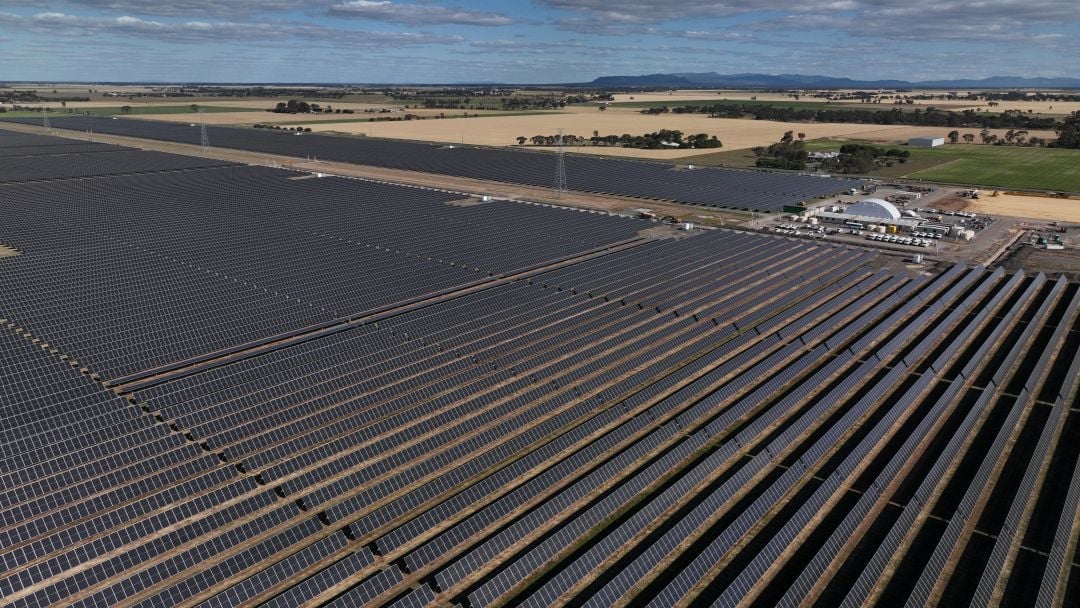
Australian NEM solar generation fell 21.2% to 3,038GWh in May 2026, while a sharp mid-month pricing spike reversed April's stabilisation trend.
Why it matters: The 'free' solar era is ending; if you aren't integrating 4-hour storage now, your projects will be crushed by price volatility and grid curtailment within three years.
The Seasonal Cliff is No Longer Theoretical
Every year, I hear European developers talk about 'seasonal balancing' as if it’s a problem for the 2030s. Australia just proved it’s a problem right now. A 21% drop in generation combined with a price spike to AU$225/MWh (roughly €138/MWh) is exactly what happens when a grid relies on 'dumb' PV without enough long-duration muscle. For those of us operating in the DACH region or the Netherlands, this is the 'Dunkelflaute' preview. When the sun retreats in May (their November), the gas peakers don't just step in; they hold the market hostage.
The Arbitrage Trap
If you are still selling C&I solar in Spain or Italy based on a simple PPA or 'self-consumption' logic, you are leaving the most profitable part of the project on the table. The Australian data shows that the spread between midday lows (often negative) and evening peaks is widening, not narrowing. We’re seeing similar volatility in the EPEX SPOT day-ahead markets. An installer who isn't pitching a Tesla Megapack or a Fluence-scale BESS alongside a 5MW rooftop array is essentially giving the client a car without a fuel tank. You need to be capturing those €150/MWh delta swings to make the IRR work when generation inevitably dips.
Stop Designing for Peak, Start Designing for Resilience
We’ve spent a decade optimizing for the 'peak watt.' That era is over. The Australian NEM spike is a signal to switch to grid-forming inverters and oversized DC-to-AC ratios. I’ve seen projects in eastern Poland struggle because they couldn't handle the ramp-rate requirements when clouds hit. If your system can't provide synthetic inertia or shift 4 hours of production into the evening peak, the utility is going to start seeing you as a liability rather than an asset. The smart money in Europe is already moving toward 'Hybrid-First' mandates—if it doesn't have a battery, it doesn't get built.