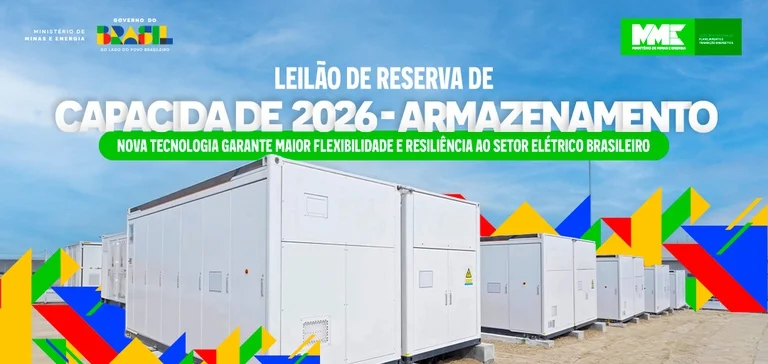
Two potential game-changing developments for Brazil’s energy storage sector were announced this week by its regulator and its energy ministry.
Why it matters: Global battery supply isn't infinite; Brazil's move to auction gigawatts of storage will tighten LFP availability and pricing for European projects through 2025.
If you’re an EPC in Germany or a developer in the Netherlands, you might be tempted to ignore Brasilia. Don't. Brazil isn't just another emerging market; it is a massive, utility-scale vacuum that is about to suck up global LFP supply. When the Ministry of Mines and Energy (MME) pulls the trigger on these dedicated capacity auctions, we aren't talking about a few pilot projects. We are looking at gigawatt-scale procurement that will compete directly with European projects for the attention of CATL, BYD, and Sungrow.
The Iberian Mirror
For my colleagues in Spain and Portugal, Brazil is your crystal ball. Brazil has hit the same wall you are facing: massive solar penetration leading to localized grid congestion and the inevitable 'duck curve' volatility. The difference? Brazil is moving toward a 'Reserve Capacity' model that actually pays for reliability. While the EU fusses over complex 'Secondary Control Reserve' markets that vary by member state, Brazil is creating a simplified, high-volume auction system that Iberdrola, Enel, and Engie—all massive players in South America—will use as a laboratory.
The Margin Squeeze is Global
We’ve seen this pattern before. When a major geography formalizes its BESS framework, the tier-1 battery manufacturers pivot their allocation to where the volume is predictable. A 500MW project in Minas Gerais is far more attractive to a Chinese vendor than ten 50MW projects scattered across the UK or France. If you are planning a BESS rollout for 2025/26, expect your hardware lead times to stretch. You are no longer just competing with the guy down the street; you are competing with the Lula administration’s push to stabilize a continental-scale grid.
Pro tip: Watch the auction pricing closely. If the strike prices in Brazil come in lower than the current LCOE for BESS in Southern Europe, your investors will start asking why they are bothering with the regulatory headache of the EU's fragmented energy union.