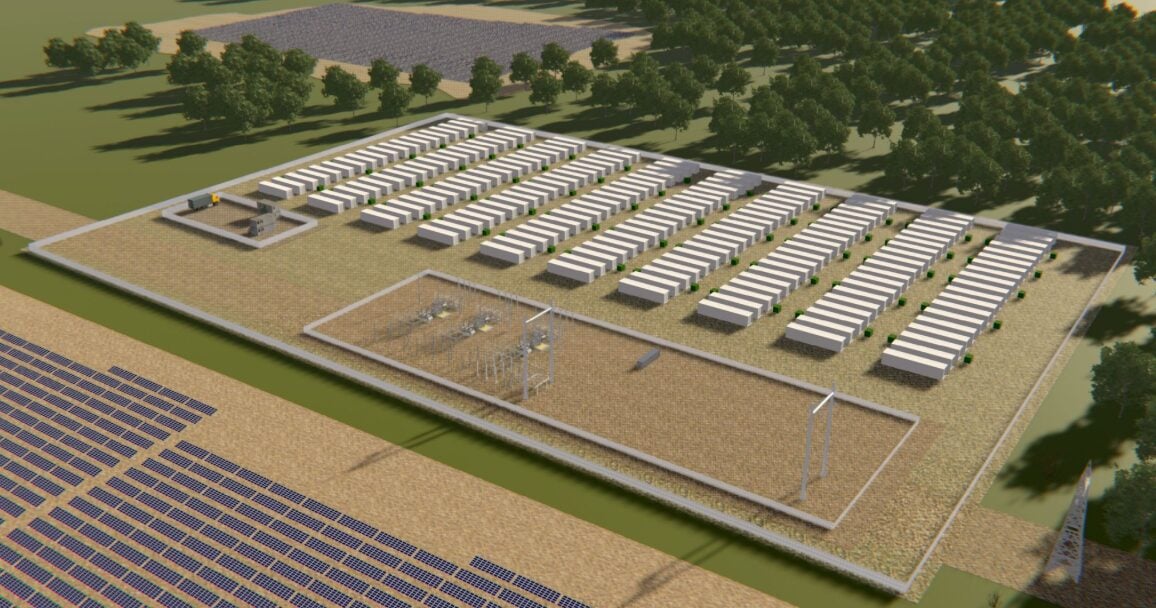
Ark Energy has received approval from AEMO and Transgrid to connect its 3,148MWh Richmond Valley solar-plus-storage site to the NEM.
Why it matters: If you aren't sizing your 2026 utility-scale pipeline for at least 4-hour storage duration, your merchant IRR projections are a fantasy.
If you’re still pitching utility-scale PV in Europe without a massive storage component, you’re essentially building a stranded asset. Ark Energy’s 3.1GWh Richmond Valley approval in Australia isn’t just a ‘big project’ news item; it is a clinical look at the only viable business model left for high-penetration renewables. When the Australian Energy Market Operator (AEMO) greenlights a battery of this scale, they aren’t just adding capacity—they are stabilizing a grid that has already seen the ‘solar duck curve’ turn into a ‘solar canyon.’
The Merchant Tail-Risk Reality
European developers in Spain and Poland should be sweating when they see these numbers. We recently saw Spanish power prices hit €0/MWh for record stretches this spring. In a world of cannibalized capture prices, the ‘solar’ part of a solar-plus-storage site is becoming the secondary asset. The battery is the profit center. Ark Energy isn't building a solar farm; they are building a 3.1GWh arbitrage machine that happens to have its own zero-marginal-cost fuel source on-site.
Technical Hurdles and TSO Lessons
The fact that Transgrid and AEMO—some of the most conservative grid operators globally regarding system strength—have cleared this connection is a testament to advanced grid-forming inverter technology. For the European installer or developer, the lesson is clear: stop fighting your local TSO (like TenneT or Amprion) on connection constraints and start proposing systems that solve the grid’s frequency problems. If you want to jump the queue in a congested grid like the Netherlands, you don't ask for more export capacity; you offer 4-hour duration BESS that makes the grid’s life easier.