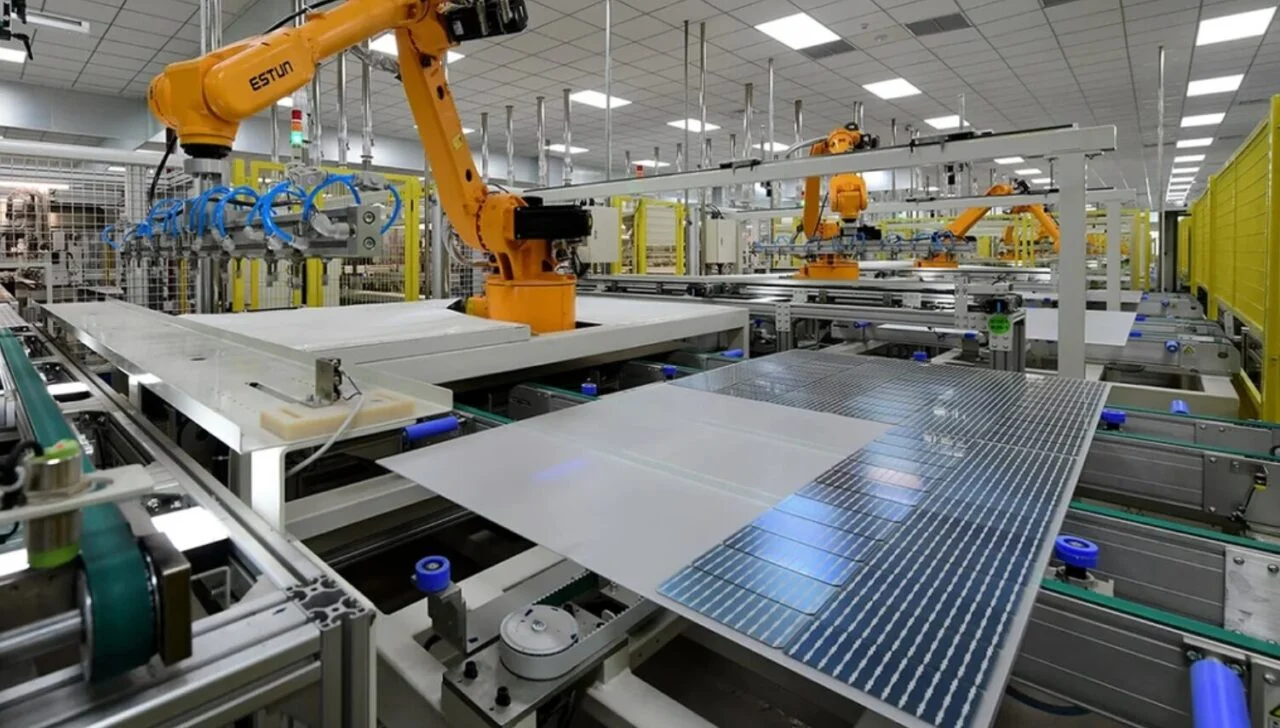
MSolar Manufacturing has announced plans to invest US$23.7 million into a new vertically-integrated solar manufacturing facility.
Why it matters: Ignore the hype: This tiny investment proves the U.S. is prioritizing political 'Made in America' wins over the massive scale needed to actually compete with global Tier 1 pricing.
Let’s talk about the elephant in the cleanroom: US$23.7 million. In the world of tier-one solar manufacturing, that amount of money barely covers the catering budget for a factory groundbreaking in Quzhou. Yet, MSolar is claiming this pittance will build a "vertically integrated" facility covering glass, cells, and modules. For any installer who has toured a Meyer Burger plant or seen the scale of LONGi’s operations, those numbers should set off every alarm bell in your head.
The Math of Manufacturing Reality
To put this in perspective, a modern 1GW TOPCon cell line typically requires an investment north of $60 million. Add a glass furnace—a massive, energy-intensive asset that needs to run 24/7—and you’re looking at another $100 million minimum. MSolar’s budget is roughly 10% of what a serious industrial-scale integrated plant requires. What we are likely looking at here is a low-volume assembly shop, perhaps utilizing semi-automated stringers and a modest lamination line, likely relying on imported sub-components despite the "integrated" branding.
The IRA Smoke-and-Mirrors Effect
Why does this matter to a developer in Rotterdam or an installer in Munich? Because it highlights the distortion caused by the U.S. Inflation Reduction Act (IRA). Under the 45X production tax credit, manufacturers get paid for every watt produced on U.S. soil. This is creating a wave of "boutique" factories that wouldn't survive five minutes in the competitive European market. While we struggle with the Net-Zero Industry Act (NZIA) and try to figure out how to keep Wacker Chemie or REC viable against Chinese margins, the U.S. is subsidizing sub-scale projects that prioritize "Made in USA" stickers over genuine economies of scale.