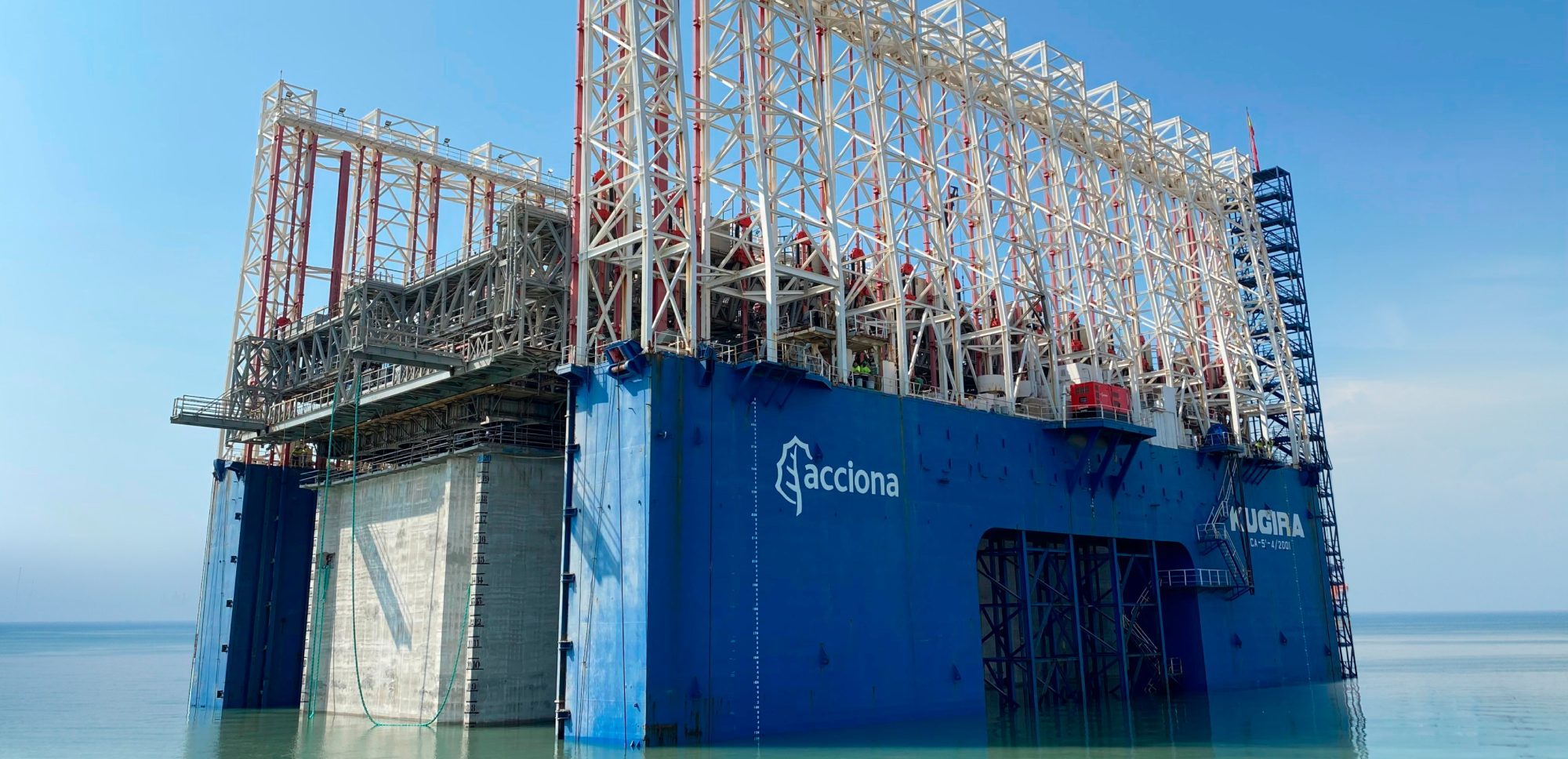
El generador, desarrollado por la empresa francesa Inocel, se emplea para suministrar energía a una grúa torre que participa en los trabajos del cajonero Kugira, destinado a la fabricación de los cajones de hormigón del proyecto.
Why it matters: Zero-emission site requirements are hitting EU tenders now; if you can't integrate H2 or BESS into your temporary power plans, you're ceding the heavy industry market to the big utilities.
If you’ve spent any time on a major infrastructure site, you know the smell: idling diesel generators. They are the noisy, vibrating heart of European construction. But Acciona’s deployment of a 200 kW Inocel fuel cell at the Port of Valencia is a signal that the heavy-duty off-grid market is finally decoupling from the internal combustion engine. This isn't just a pilot for the sake of a press release; it’s a direct challenge to the temporary power rental market.
The BESS vs. H2 Calculation
Most of us in the solar world would look at a tower crane and immediately pitch a 500kWh BESS container. It’s simpler, the round-trip efficiency is better, and we know the tech. But on a high-intensity site like the Kugira concrete caisson project, the duty cycle of a crane can be brutal. If the local grid connection is non-existent or throttled—common in port expansions—recharging a massive battery overnight becomes a logistical nightmare. This is where the 200 kW fuel cell wins: energy density and rapid refueling. For the installer, this means acknowledging that for the 'heavy' in heavy industry, storage isn't always a battery.
The Margin in 'Green' Construction
We’re seeing a shift in EU public tenders where the carbon footprint of the construction process itself is being scored. In Spain, under the Plan de Recuperación, Transformación y Resiliencia, companies like Acciona aren't just looking for cheap power; they are looking for the 'Zero Emission Site' badge to win the next billion-euro contract. If you are an EPC or a specialized solar installer, you need to stop thinking about hydrogen as 'the future' and start looking at it as a complementary tool for your off-grid C&I clients. When the client asks for 500kW of peak power in a location with zero grid, and your BESS quote looks like a phone number, having a partnership with a fuel cell provider like Inocel or Helion is how you save the deal.