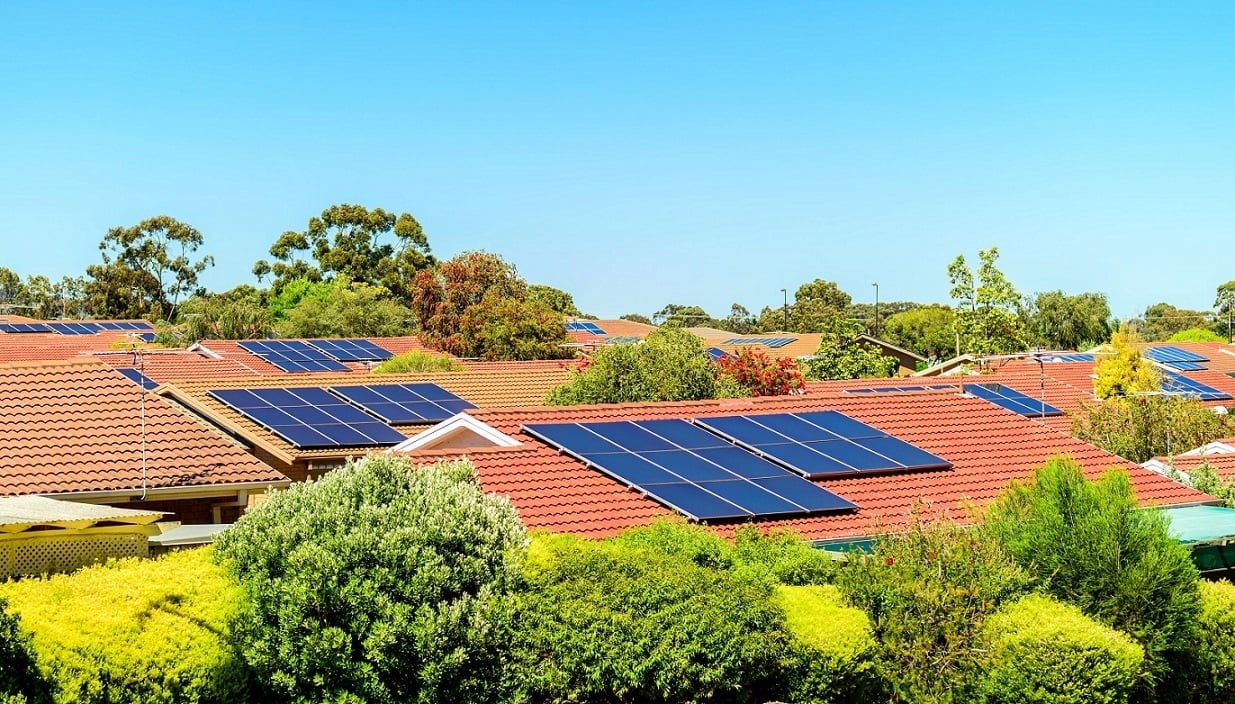
Australia leads the world in residential rooftop solar, but its commercial and industrial sector has deployed only 5.6GW.
Why it matters: The C&I sector is where the volume is, but you need a financial and legal toolkit to bypass the landlord-tenant split incentive or you'll stay stuck in residential.
The IEEFA report on Australia’s 'missing middle' is a cautionary tale that resonates from Berlin to Barcelona. While Australian households have embraced PV with religious fervor, the 5.6GW C&I figure is an embarrassing fraction of its potential. In Europe, we are staring at the exact same bottleneck: the split-incentive deadlock. If you are an installer in the Netherlands or Germany, you know this headache—a warehouse owner refuses to drop €300k on a system when the tenant is the one pocketing the bill savings.
The Compliance Arbitrage Strategy
We need to stop selling 'green energy' and start selling 'regulatory survival.' The EU’s revised Energy Performance of Buildings Directive (EPBD) is the hammer Australia lacks. Starting in 2026, solar becomes mandatory for new non-residential buildings over 250m². By 2027, existing commercial buildings undergoing renovation must follow suit. This isn't a suggestion; it’s a construction requirement. For an EPC, this shifts the conversation from ROI to compliance arbitrage. You aren't just an installer; you are the consultant who keeps their building legal.
Follow the Financing, Not the Sun
The Australian failure proves that high irradiance doesn't guarantee high C&I adoption. The missing piece is sophisticated financing. In Europe, we’re seeing the rise of 'as-a-service' models from companies like Enpal (moving into C&I) or specialized PPA providers. If you’re still pitching a simple CAPEX model to a landlord, you’re doing it wrong. You need to offer a tripartite agreement where the landlord gets a roof lease payment, the tenant gets a 15% discount on grid power, and you get the O&M contract for 20 years.