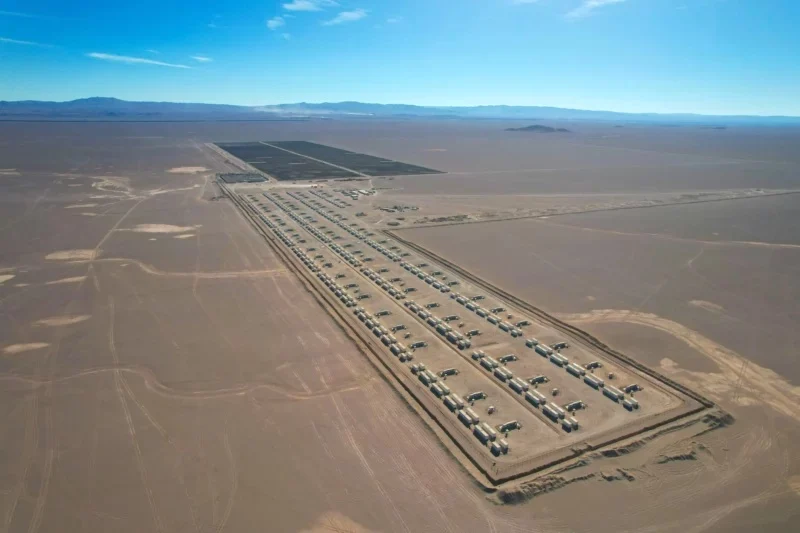
The president of Chile, José Antonio Kast Rist, was in attendance as IPP Grenergy inaugurated a 3.5GWh battery energy storage system (BESS).
Why it matters: Grenergy is using Chile as a high-stakes testing ground for the exact solar-plus-storage models that will soon be mandatory for survival in the Spanish and Italian markets.
Don’t let the South American geography fool you: this is a Spanish story through and through. Madrid-based Grenergy isn’t building 3.5GWh of storage in the Atacama desert just to get a photo op with a president; they are doing it because they’ve seen the future of the Iberian market, and it looks terrifyingly like Chile’s present.
The 'Price Cannibalization' Mirror
Chile has been the global laboratory for solar curtailment and negative pricing for years. When you have a massive imbalance between northern generation and southern load centers, your PPA isn't worth the paper it’s printed on unless you can shift electrons. For a European developer, the Oasis de Atacama project is a flashing neon sign. Spain is currently hitting record levels of solar penetration, and we are already seeing €0/MWh prices during peak production hours. If you are developing 50MW+ utility-scale projects in Extremadura or Puglia without a clear path to 4-hour BESS integration, you are building a stranded asset.
The CATL Factor and Hardware Hedging
Grenergy’s choice to lock in CATL’s EnerX containers for this project is a strategic move that European installers should watch closely. By committing to such massive scale, they aren't just buying batteries; they are securing a supply chain priority that most mid-tier EU developers lack. We’ve seen projects in the Netherlands and Germany stall because of 18-month lead times on high-voltage inverters and battery enclosures. Grenergy is essentially front-running the inevitable rush for storage that will happen when the EU’s Electricity Market Design reforms fully kick in.
Grenergy is exporting the 'Atacama Model' back to Europe. They are proving that the only way to protect a solar IRR in a saturated market is to become a storage company that happens to own some panels. If your 2025 pipeline doesn't have a GWh-scale roadmap, you're already behind the curve.