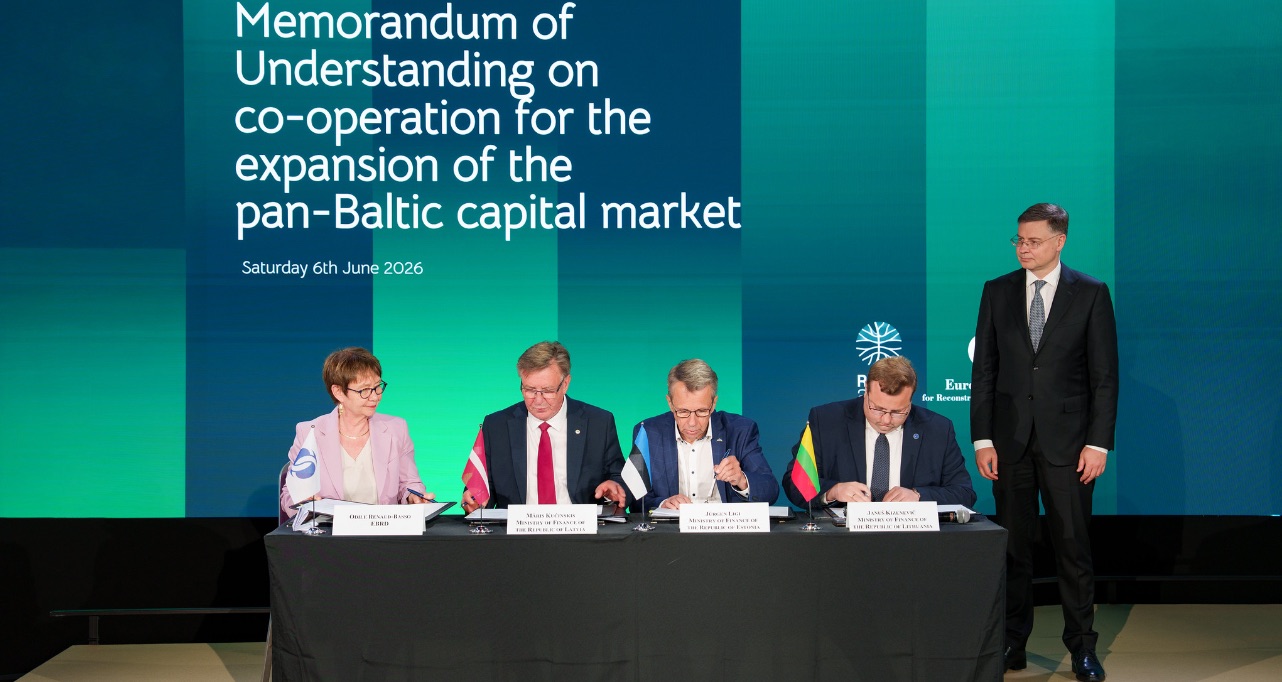
The EBRD has partnered with Estonia, Latvia, and Lithuania to advance a unified pan-Baltic capital market, enhancing financial integration and investment appeal.
Why it matters: Unified Baltic markets mean lower financing costs and a much easier exit for developers selling portfolios to institutional infrastructure funds.
If you’ve ever tried to finance a 50MW solar farm in Estonia or a hybrid BESS project in Latvia, you’ve hit the same wall: the "small market" penalty. Investors hate fragmentation. Individually, the Baltic states are niche frontier markets; together, they have the scale to move the needle for institutional capital. This EBRD-backed push to create a unified pan-Baltic capital market isn't just dry financial plumbing—it’s a massive de-risking event for utility-scale developers.
The 'Exit' Strategy Just Got Real
The goal of achieving MSCI Emerging Market status is the headline here. Why should an EPC in Berlin or a developer in Warsaw care? Because institutional funds (the big fish like Allianz or BlackRock) often have mandates that prevent them from investing in "frontier" markets. By bundling these three nations into a single, liquid investment pool, the EBRD is creating an exit ramp. You can build a portfolio across the three states and sell it to a pension fund that previously wouldn't have looked at a standalone 20MW project in Vilnius. Liquidity equals lower cost of capital, and in a high-interest-rate environment, that’s the difference between a 7% and a 12% IRR.
Energy Independence is the Catalyst
We have to look at the clock. The Baltics are scheduled to desynchronize from the Russian-controlled BRELL power grid by February 2025. This isn't a polite suggestion; it's a hard deadline for energy sovereignty. This decoupling necessitates a massive, rapid build-out of local generation and storage. We aren't just talking about rooftop solar; we’re talking about the infrastructure required to replace Soviet-era grid stability. This MOU signals that the financing structures are finally being built to match that geopolitical urgency.