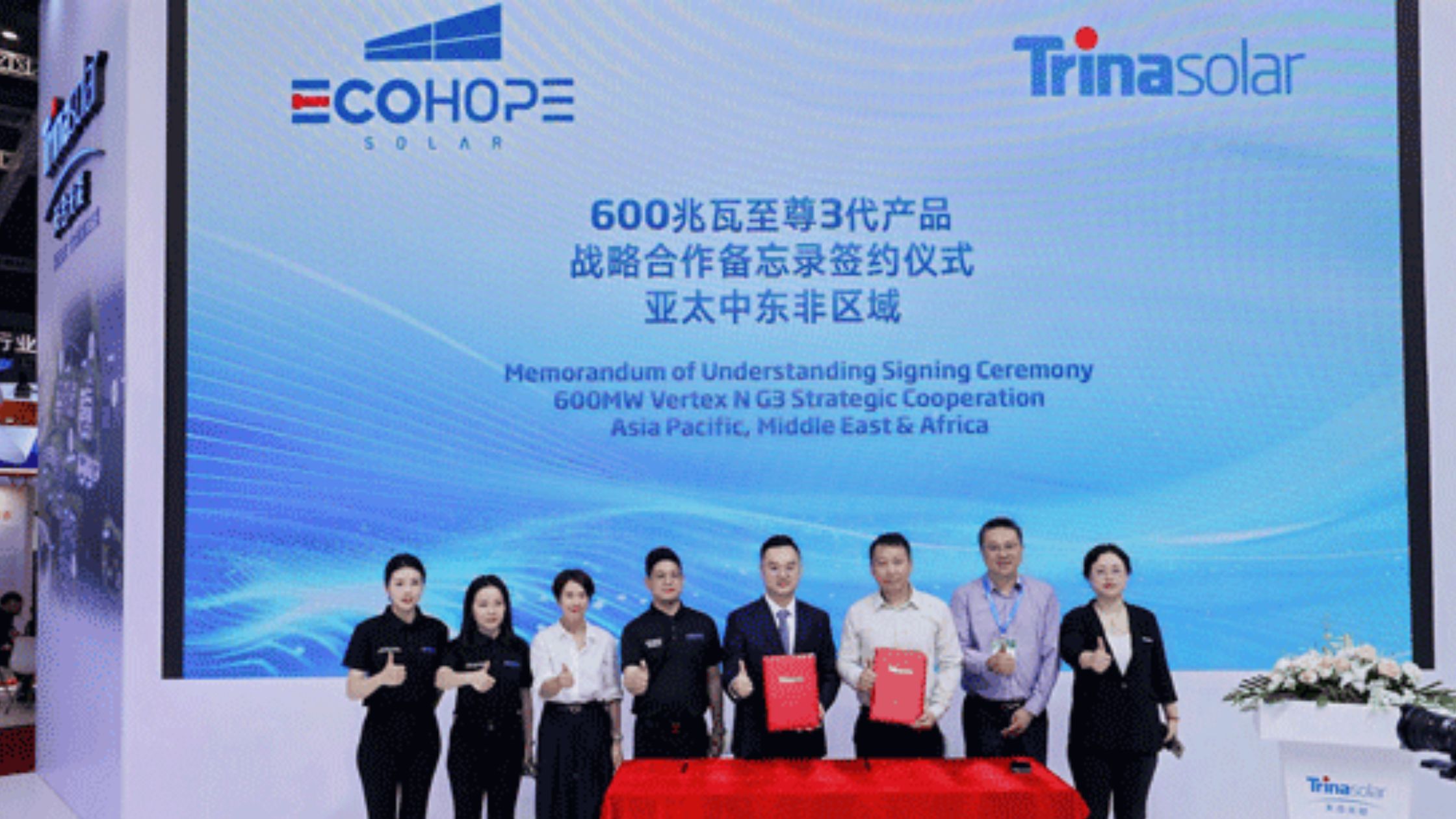
Trinasolar has signed a Memorandum of Understanding with Ecohope Solar to supply 600 MW of solar modules across Southeast Asia, the Middle East, and Africa over three years.
Why it matters: The EU's module oversupply won't last forever; Trina's pivot shows that Tier 1 brands are securing high-volume alternatives that will eventually tighten supply for European installers.
An MoU isn’t worth the PDF it’s saved on until the first container ships, but Trinasolar’s 600 MW deal with Ecohope Solar is a loud signal to every procurement manager in Europe. While we’ve spent the last 18 months enjoying a buyer's paradise—gorging on the inventory glut in Rotterdam and watching prices crater toward €0.10/Wp—the Tier 1 manufacturers are aggressively de-risking their exposure to the European market.
The Diversification Hedge
Don't be fooled by the three-year timeline. This is about Trina finding high-volume outlets for their n-type TOPCon Vertex series in regions where the regulatory climate is less volatile than the EU. In Brussels, we’re debating the Net-Zero Industry Act (NZIA) and forced labor regulations that could eventually bottleneck Chinese imports. By locking in volume in Thailand and the GCC, Trina is building a firewall. If the EU makes it too difficult or expensive to sell into Germany or the Netherlands, they already have 600 MW of demand ready to soak up production capacity elsewhere.
The Pricing Floor
For a European installer, this is the end of the "infinite supply" era. These emerging markets are no longer the dumping grounds for B-grade panels; they are demanding high-efficiency modules for massive C&I projects. When a developer in Riyadh is willing to sign for 200 MW at a stable margin, Trina has zero incentive to entertain a 5 MW order from a mid-sized German EPC at a loss. We are moving from a supply-push market to a demand-pull market.
If you're still waiting for module prices to drop another 5% before signing your 2025 supply agreements, you're playing a dangerous game. The floor is likely in, and the manufacturers are already looking past you toward the sun-drenched C&I booms in the Global South.