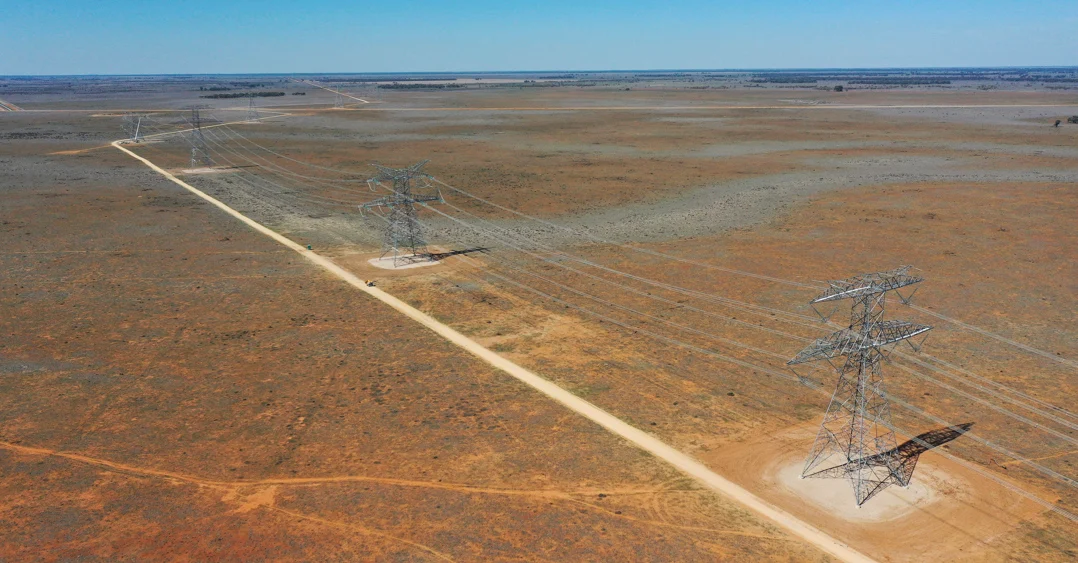
Project EnergyConnect, Australia's largest transmission project, is being fully energised following completion of construction on its New South Wales (NSW) section.
Why it matters: Grid congestion is the #1 killer of solar IRR; Australia's success shows that massive infrastructure, not just local storage, is the only way to end the curtailment crisis.
While European developers are busy arguing over the merits of TOPCon versus HJT, the Australians just finished the only thing that actually matters for long-term ROI: a massive 900km extension cord. Project EnergyConnect isn't just a feat of civil engineering; it’s a direct assault on the curtailment death spiral that plagues high-penetration renewables markets.
The Interconnector Cure
South Australia has long been the world’s laboratory for 'too much solar.' We’ve seen negative pricing events there that would make a German asset manager weep. By linking SA to New South Wales via this 330kV (and 500kV) backbone, Transgrid is effectively creating a pressure release valve. For a developer in the Riverina district, this is the difference between a project that gets throttled at noon and one that actually hits its P90 yield targets.
Lessons for the EU's 'Paper Grid'
We need to look at this through the lens of our own bottlenecks. Think of the SuedLink in Germany or the perennially delayed interconnections across the Pyrenees. We have 10-year queues for grid connections in parts of the Netherlands and Spain because our TSOs (Transmission System Operators) are moving at the speed of a tectonic plate. The Australians just proved that you can build 900km of high-voltage infrastructure across brutal terrain if the political will is there. If TenneT or Red Eléctrica don't match this urgency, your 'shovel-ready' 50MW project in 2024 is going to be 'still-waiting' in 2029.
The BESS Multiplier
Don't assume this makes batteries redundant. In fact, large-scale interconnectors like this often increase the value of fast-frequency response (FFR) services. As we move more power over longer distances, maintaining grid inertia becomes a software and battery problem. If you’re a developer in Portugal or Poland, start looking at the maps where new HVDC or high-voltage AC lines are planned. That is where the merchant tail of your project lives or dies.