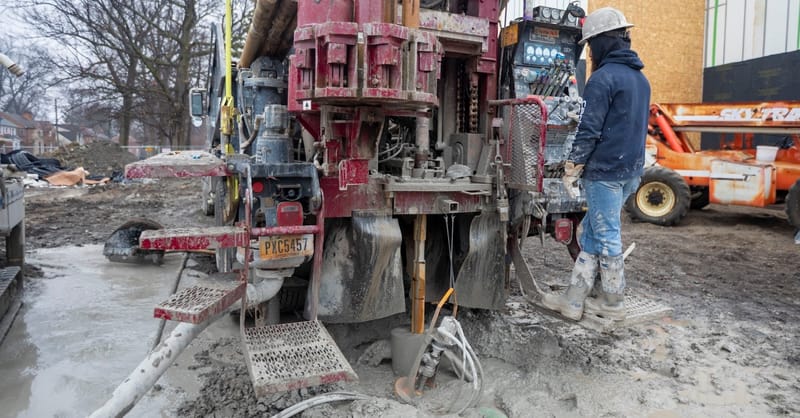
Geothermal networks are taking off across the U.S., with roughly 30 such projects in various stages in Massachusetts, Colorado, and elsewhere. These systems — which use electric heat pumps and thermal energy from underground to warm and cool buildings — are key to weaning communities off polluting fossil-fueled…
Why it matters: Thermal networks are the utility-scale competitors to your individual heat pump sales—ignore municipal heating plans at your own peril.
The Efficiency War You Aren't Tracking
While the European solar industry is busy patting itself on the back for record-breaking Air-Source Heat Pump (ASHP) deployments, the US move toward geothermal network training signals a pivot we need to take seriously. If you're a project developer in Germany or the Netherlands, you’ve likely built your 2025-2030 roadmap on the back of individual residential and C&I heat pump installations. This news is a reminder that Thermal Energy Networks (TENs) are the 'utility-scale' version of your business model, and they are significantly more efficient.
Consider the math: a standard ASHP in a cold climate like Warsaw or Munich sees its Coefficient of Performance (COP) crater when the mercury hits -10°C. Geothermal loops, however, tap into a constant 10-12°C source. We are talking about a COP of 4.5+ year-round. For an installer, this is a market-share threat. Under the German Wärmeplanungsgesetz (Municipal Heating Planning Act), cities are currently deciding which neighborhoods will get district heating. If a street is earmarked for a geothermal network, your pipeline of individual 12kW heat pump leads will evaporate overnight.
The Labor Siphon
The establishment of a dedicated training hub is a classic market signal. It tells us that the bottleneck isn't technology—it's the 'boring' stuff: drilling and pipefitting. For a solar business owner, this is a warning about the talent war. The same specialized electricians and hydraulic engineers required for complex 100kWp+ PV-to-Heat systems are exactly who the geothermal utilities (think Vattenfall or E.ON) are looking to poach. If you aren't offering a path into integrated thermal-electrical systems, you’ll lose your best lead techs to the guys with the drilling rigs.
We saw this pattern during the Dutch 'gas-free' transition. Companies that specialized only in PV found themselves sidelined when entire districts opted for collective thermal solutions. Don't be the person selling individual wood stoves when the city is installing central heating.